Garrett Akahoshi, a California native, has spent decades running and staying active. From Ironmans to the Abbott World Marathon Majors, he’s chased personal bests and checked off some of the world’s most iconic races.
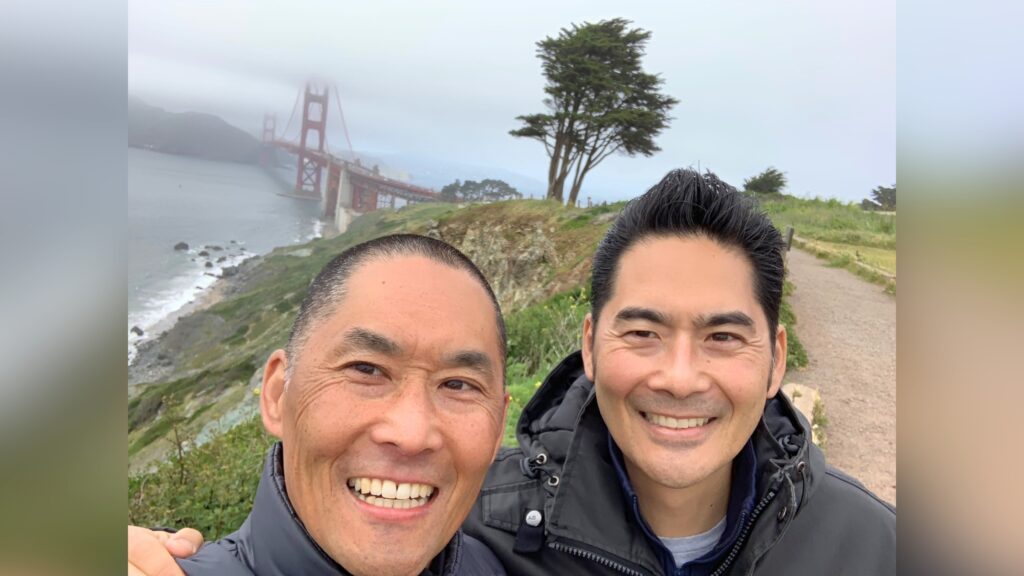
But now, as he prepares for the 2026 Boston Marathon, Garrett approaches the race with an even bigger goal. It is no longer just about personal achievements or the thrill of the challenge; it’s about honoring his younger brother, Kirk, who passed away from pancreatic cancer in 2019.
Partnering with Project Purple and raising funds for pancreatic cancer research and patients, this journey makes the Boston Marathon unlike any he has run before. The emotional weight of his brother’s memory transforms every mile into a tribute, turning what was once just a personal challenge into a mission with meaning far beyond the finish line.
A Lifelong Athlete: From Triathlons to Marathons
Garrett has always been drawn to movement. Growing up, sports were a part of his daily life: soccer, basketball, and anything that kept him active. That drive carried him into college at Cal Poly San Luis Obispo, where he found organized sports were harder to maintain.
As a result, running became his outlet: a way to stay in shape and challenge himself as he distanced himself from the sports he grew up playing. Along the way, Garrett came in contact with a triathlon coach in 1989, at a time when the sport was in its infancy.
He went to an intro meeting and quickly thought to himself, ‘Cool, let’s try swimming, biking, and running.’ That was the start, and from there I developed a lasting love for endurance sports.”
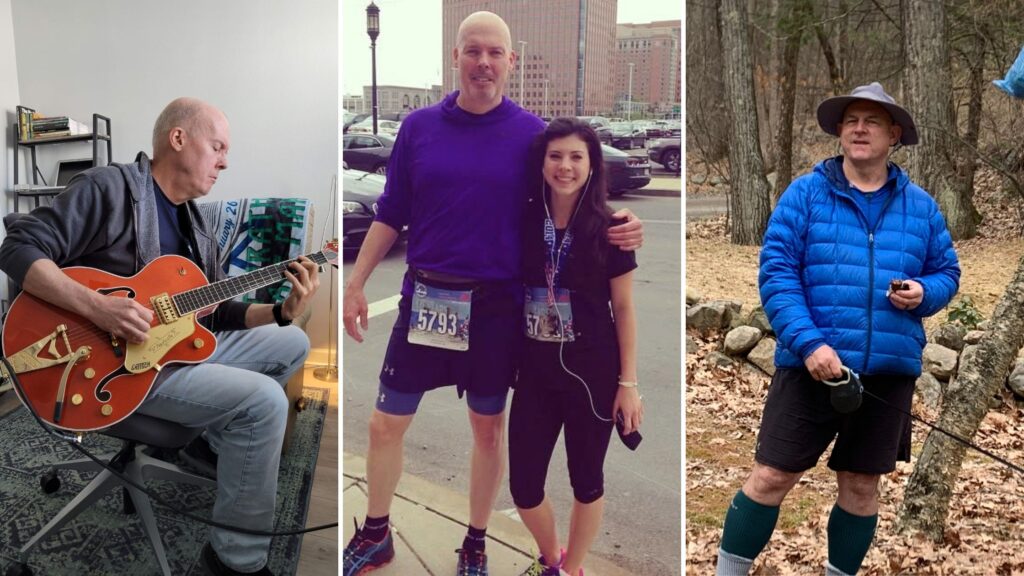
Over the years, Garrett immersed himself in triathlons, completing countless races, including three grueling Ironmans, and developing a deep passion for long-distance challenges.
But life has a way of shifting priorities. With children entering the picture, triathlon training, which Garrett describes as a “selfish sport” that requires long hours on the road, in the pool, and on the bike, became increasingly difficult.
He thought to himself, “I reached my goal of doing triathlons, I’m happy, I’m done.” But he didn’t want to give up being active. Gradually, he transitioned to running-focused training, finding a new way to challenge himself while keeping his endurance streak alive.
Shorter marathons led to iconic races like New York, London, and Berlin. Catching the bug for the majors, he thought, “Okay, let’s try doing the Big Six.” He’s been fortunate to complete many of them, even running Berlin alongside his wife.
When she qualified for Boston through Berlin, Garrett learned that the only way he could join was by fundraising. Running had always been personal for him, but now the seeds of a deeper purpose were quietly taking root.
Inspired by his younger brother, Kirk, whose battle with pancreatic cancer had left a profound mark on his life, Garrett realized this race could accomplish two meaningful goals: finally running one of the world’s most iconic marathons and honoring his brother’s memory.
Lessons From a Life Well Lived
Garrett’s younger brother, Kirk, had been struggling for over a year before anyone realized the severity of his condition. In early 2019, he experienced persistent stomach pain and gastrointestinal issues, but were dismissed by doctors who said, “‘You’re young, it can’t be cancer. Just change your diet.’”
For more than a year, Kirk’s symptoms were downplayed, a frustrating wait filled with uncertainty and worry. It wasn’t until a trip to the emergency room that a doctor decided to do a CT scan. By the time they found the cancer in his pancreas, it was already at Stage 4.
Kirk immediately entered a clinical trial at UCSF and underwent chemotherapy. However, being a psychotherapist, Kirk was also into holistic medicine. “He was into a lot of alternative stuff,” Garrett says, “so he looked at it from the other end spiritually. He looked at his diagnosis from all angles.”
Kirk’s unique perspective didn’t just help him face the disease; it became a guidepost for those around him. During his illness, Kirk shared his journey openly, posting videos on YouTube about his experiences, thoughts, and reflections. “That’s the type of person he was,” Garrett says. “He wanted to share his cancer journey, what he was going through, and his thoughts about it.”
But Kirk was more than a patient. He was a person who lived fully and loved fiercely. “He was very caring, always thinking about others. Always,” Garrett shares. At the same time, he was spirited and driven to squeeze every drop of joy out of life. As Garrett remembers, “He was the kind of person who would never miss a party. He traveled the world, lived in New York for a few years, and embraced life in every way.”
Even during chemo, Kirk found ways to infuse joy into the routine, wearing playful costumes for each treatment session and reminding those around him of the importance of light-heartedness, even in the face of struggle. Though he passed away in November 2019, his spirit and unique approach to life left a lasting imprint on Garrett, shaping the way he now moves through each day.
“The biggest thing I learned from everything he went through is to live life to the fullest,” Garrett reflects. “Every day is unpredictable, so enjoy today, have fun, be a good person, and help others.” And with running Boston, Garrett can honor that lesson in motion.
Redefining the Finish Line
During his brother’s pancreatic cancer journey, running became Garrett’s way of processing the whirlwind of thoughts and emotions that came with such a difficult time. He doesn’t run with music, preferring the quiet space to reflect.
“It was just an amazing outlet for me, especially when my brother was going through treatment, and then when he passed,” he shares. “It became a time just for myself, to think about things, to process everything.”
While researching organizations to run with in order to join his wife at the Boston Marathon, Garrett came across Project Purple on the marathon website, a moment he calls ‘serendipitous.’
“I was like, ‘Is this my brother telling me something?’ I mean, it was just perfect,” he recalls. “And of all the cancers, pancreatic cancer unfortunately has very little known about it. So for Project Purple to show up, it was great.”
Additionally, Boston has always held a special allure for Garrett. It’s one of the oldest and most prestigious marathons in the world: a personal milestone he had long dreamed of achieving. “People ask me, ‘Why Boston?’” he says. “And my answer is always, ‘It’s Boston! It’s the one to do.’” Also, his wife is from Boston, making the race even more special.
Training for this race has been very different from Garrett’s past experiences. In more intensive events, his approach was highly methodical, built around chasing times, splitting seconds, and pushing his body to its limits in pursuit of personal achievement.
However, what motivates him now is completely different. “On the hard days, I keep going by knowing I want a peaceful race day,” Garrett says. “I’m not hoping to run the perfect race.”
In past triathlons and marathons, the finish often came with pain and exhaustion so overwhelming that it was hard to take anything else in. This time, Garrett wants something else entirely: to feel the day as it unfolds and absorb the meaning behind every mile.
“I want to have a good day, to enjoy it, to do the full race for what it is without suffering so much, and to be present,” he shares. “Because when you’re hurting, you’re not really present.”
So, while training, he wants to truly push himself so that on race day, it comes easy. His approach is simple: “Let it hurt now, run in the rain, push yourself in training, so race day is easier.”
What 26.2 Really Means
On race day, Garrett isn’t sure what emotions will surface. “I’ve thought about it, and I really don’t know,” he admits. What he does know is how he wants to experience the day. “My plan is to enjoy it, to look around, to take it in. I just want to cruise and really be there.”
He knows it will hurt by the end, as all marathons do. But this time, the pain won’t be the defining feeling. “It won’t be like, ‘Oh, I just finished a marathon,’ because I know I can do that,” he says. “It’ll be more of a happy, gratitude thing. Like, I was able to do this for the community and for my brother.”
In quiet moments, Garrett can almost hear Kirk’s voice alongside him. “It’s cliché to say, ‘This is something he would want you to do,’ but this really is something he would do,” he says. Laughing, he adds, “He’d probably say, ‘I sent you all these signs that you should have signed up for this race!’”
The fundraising process added a new layer of meaning. “I reached my goal within the first three to four weeks of raising $15,000, and it’s all because of my brother. It’s been amazing,” Garrett shares.
Beyond Boston, Garrett hopes his run helps shine a brighter light on pancreatic cancer, a disease that remains deeply misunderstood. “The awareness piece really hits home with me,” he explains.
As a physical therapist, Garrett has seen how easily symptoms can be overlooked. “Doctors are people too. They can be dismissive. That happens. But you have to be your own advocate,” he says. “If you feel like something is wrong, you need to push for it. That’s huge.”
His work has also given him a new perspective on how movement and strength can play a role in healing. One of his current patients is a pancreatic cancer survivor, an experience that has pushed him to think differently about the kind of care he wants to provide. “It’s made me think about doing physical therapy specifically for cancer patients,” he says.
Running for Project Purple has opened a door for Garrett, not just to advocacy, but to a deeper sense of purpose. “You’ve got to do it for the right reasons,” he says. “You’ve got to want to help other people. I’m really grateful I was chosen to run for Project Purple. It means a lot.”
As he prepares to toe the line in Boston, Garrett knows he won’t be running alone. He will carry Kirk with him through every mile, every cheer, and every step toward the finish. “I like to believe he would be the first to push the mission forward,” Garrett says. “Raising awareness, inspiring others, and running for the people who are still fighting.”
For Garrett, it feels like everything aligned at once. He gets to run Boston, which is incredible on its own, but he also gets to honor his brother. “It’s way more special. It has so much more meaning than any other race I’ve done,” he says. “It doesn’t feel like I’m doing it for myself anymore. It’s for the whole community.”
To support Garrett’s run in honor of Kirk and to help raise awareness for pancreatic cancer, donate to his fundraising page here.
If you’d like to run or participate in an event of your own for Project Purple, visit our events page.