Alana Anderson has raced all over the world, but this spring’s London Marathon carries a meaning far beyond 26.2 miles. It is a bridge between two worlds: the running she has loved for years and the family she cherishes. She will run in honor of her mother-in-law, Carol, who passed away from pancreatic cancer in 2023, with each stride serving as both a tribute and a way to carry forward the values she lived by.
For the first time, Alana is also experiencing running as part of a team through Project Purple, and it has transformed how she approaches the sport. This sense of camaraderie, combined with the deeply personal motivation behind her race, has made training and the London Marathon itself a wholly different experience: one where reflection, connection, and purpose converge with every mile she runs.
The Early Miles That Shaped Her
Alana’s journey with running began more than a decade ago, in an almost-accidental way. In 2009, her then-boyfriend, now-husband, signed up for the San Francisco Half Marathon, Alana decided to join him. With no formal training and five miles being the longest distance she had ever run, Alana relied on a run-walk approach to get through the race.
“The first one was a lesson learned,” she recalls, laughing. It wasn’t an experience she loved, but that first introduction to racing still planted a seed she didn’t realize would grow years later.
After that first dabble into formal running, Alana made some running friends, discovering not just the joy of movement but the social and mental benefits of the sport. She cheered for friends at marathons, and gradually thought, “Maybe I could do one too!”
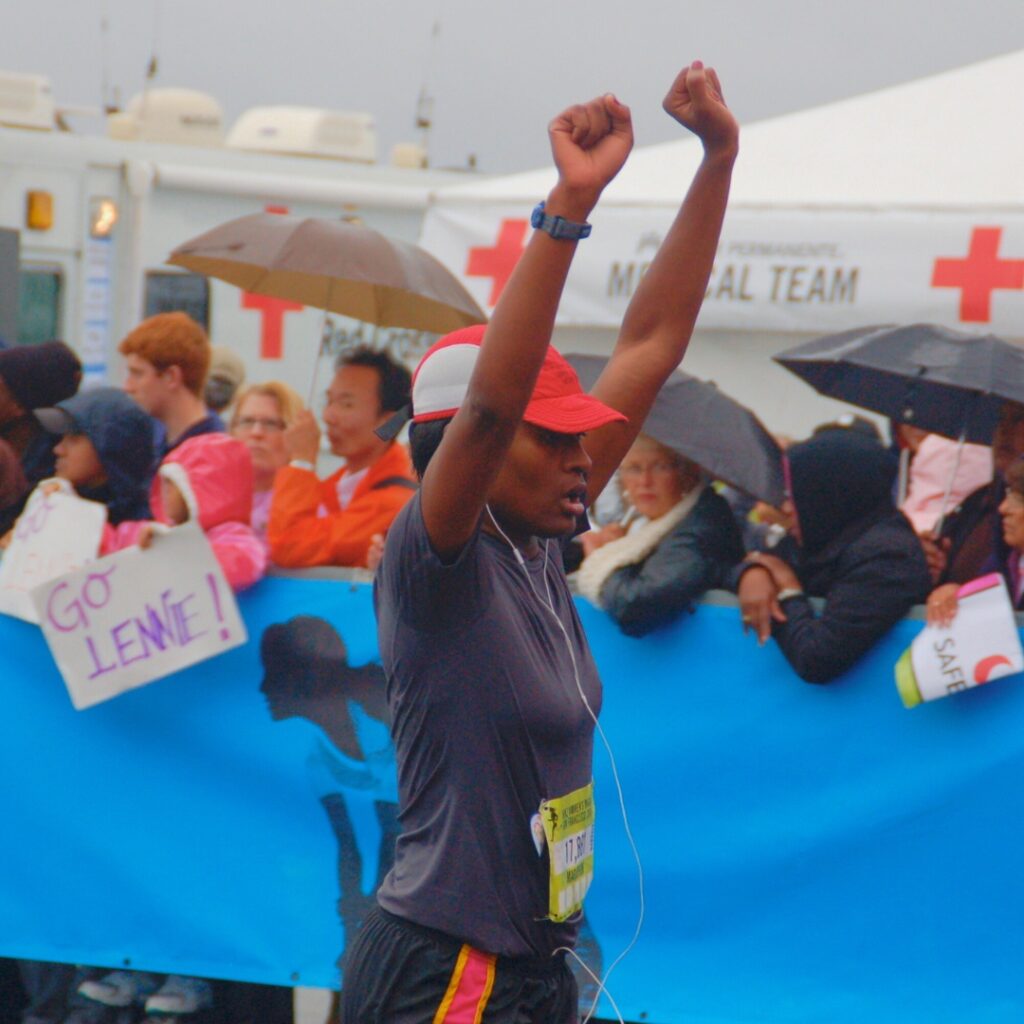
That curiosity led her to the Nike Women’s Marathon in San Francisco in 2011, where she ran her first full marathon. Crossing that finish line, Alana experienced such pride that came from testing the limits of her body and mind.
“During that race, I had all these moments where I was in awe of my body and really proud of myself and my spirit,” she shares. “I got a real runner’s high, and from there, I fell into being more interested in running half marathons and marathons.”
Since then, Alana has completed races across the globe, including the New York City, Berlin, Chicago, and Columbus marathons. She loves how running gives her time to be at peace with her thoughts, offering her space to reflect while staying mentally and physically engaged.
“I love the ability it gives me to be competitive with myself in a really healthy way,” she says. While running had long been a deeply personal pursuit, it took on an entirely new meaning after her mother-in-law, Carol, passed away from pancreatic cancer in 2023.
A Life That Left a Mark
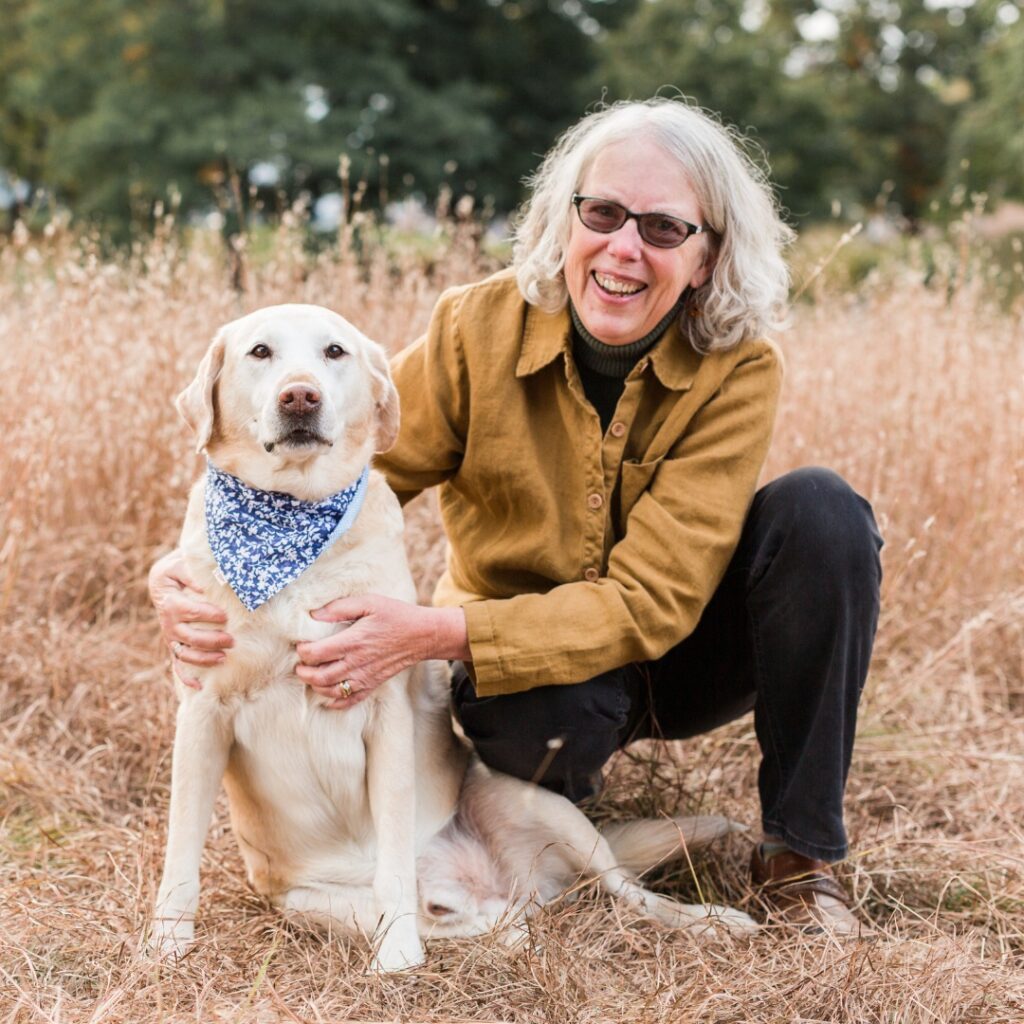
To Alana, Carol was someone whose presence made people feel seen. “She was such a sweet lady,” Alana recalls, “but she also had a lot of conviction about the things that were important to her. She was unafraid to speak about them.” That balance of warmth and fearlessness shaped the way Carol connected with others and moved through the world.
Carol was curious by nature and eager to learn. She and Alana’s father-in-law were constant adventurers, taking road trips to new places and collecting stories along the way. One year, they even decided to keep bees and make their own honey, just one example of Carol’s openness to trying something new and meaningful. Wherever she went, Carol was deeply interested in people: their stories, their experiences, and what she could learn from them.
When Carol was diagnosed with pancreatic cancer, those same qualities remained visible. Doctors initially believed she was dealing with pancreatitis, but as further testing continued, it became clear that the diagnosis was far more serious. Pancreatic cancer was not unfamiliar to the family, with Carol’s brother also having battled the disease.
Determined to pursue the best possible care, Carol and her husband made the difficult decision to leave Indiana and relocate to Boston, where Alana and her husband reside, so Carol could undergo treatment in Massachusetts. There, Carol began chemotherapy and radiation, and for a time, the treatment seemed to be working. She felt well, and there was renewed optimism when she was deemed eligible for the Whipple procedure.
But during surgery, doctors discovered that the tumor had grown too large to be removed. Carol ultimately declined palliative chemotherapy and returned home to Indiana, her home where she felt at peace. Even in the face of this setback, Carol remained a steady embodiment of strength, grace, and love.
Throughout her treatment, she formed deep bonds with several nurses who cared for her. And when she returned to Indiana, she reconnected with those nurses, not because she needed anything, but because it mattered to her to know how they were doing and to thank them for the care and compassion they had shown her. That instinct to look outward, even in moments of profound personal suffering, was a testament to the kind of person Carol was.
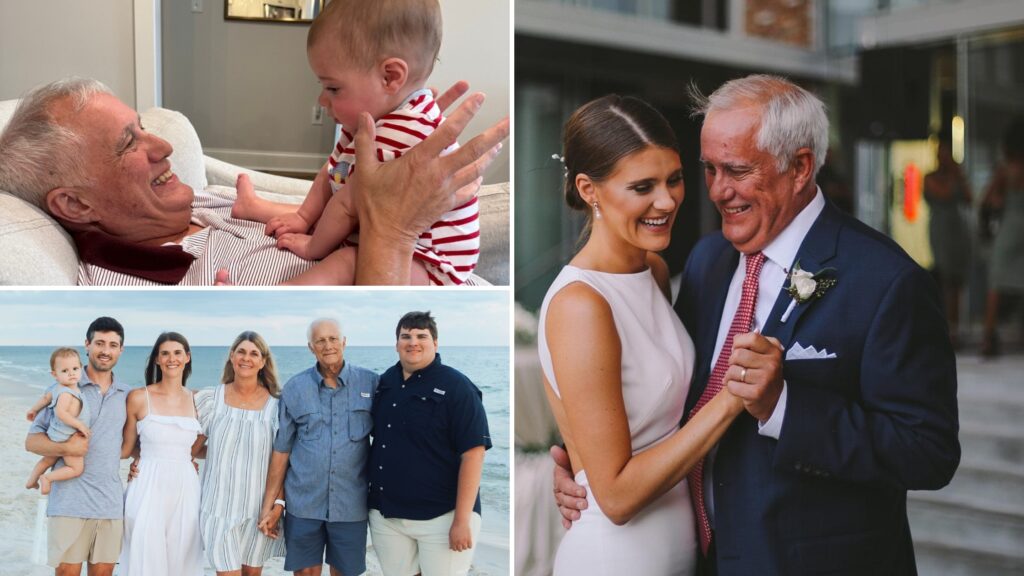
She passed away in January of 2023, and at her memorial, stories poured in from friends near and far, each one echoing the same truth: Carol was a gentle, loving presence and often the glue that held people together. She was a devoted mother, a supportive friend, a loving mother-in-law: someone who cultivated deep, meaningful relationships and made people feel seen and connected.
Carrying Carol’s Values Onward
That same spirit of engagement, care, and curiosity that defined Carol’s life inspired Alana’s own journey with running. In 2023, while training for the Berlin Marathon, Alana reflected on the way running became different for her after her mother-in-law’s passing: a way to process grief while also honoring Carol’s example of engaging fully and being present.
“Running has this really important ability to help me go inward in appreciation of my body, in a way that day-to-day I don’t,” she says. “Watching someone’s body deteriorate through illness, you realize how precious your own strength is, and that awareness makes the act of running feel even more meaningful.”
When Alana began considering the London Marathon, Carol’s influence was on her mind. She knew she wanted to get into the race through fundraising, and when she found Project Purple on the marathon’s website, she immediately felt drawn to the cause.
Choosing to run for Project Purple felt like a natural extension of Carol’s own dedication to causes throughout her life. As Alana describes, “As she got older, she understood the value of using her voice for things that were important to her, finding meaning in speaking up and speaking out for the causes that were important to her.”
London was also not a random choice of a race. While it is on the list of Abbott World Majors that Alana is striving to complete, the city itself holds special significance. Having traveled there four times already, London is one of her favorite cities, and it brings to mind Carol’s constant wonder for life.
“There’s so much that she didn’t get to see, so often when we travel, I think, ‘Gosh, Carol would have loved this,’” Alana shares. “It’s a motivation to do more, see more, be curious, and to embrace new experiences in really intentional ways on behalf of her. I like to think that if she were still living, she would have come to the marathon and would have taken that adventure with us to cheer on the race and experience London.”
Deciding to do this in Carol’s honor allows Alana to carry forward that spirit of thoughtful action and care. “She would always want to be one of the first to rally around and help someone in need,” Alana shares. “To be able to spotlight an organization that is doing good for people in honor of a person who was always the first to show up, the first to sit with someone and offer support, is really important. That was the type of person she was.”
Carol’s lifelong devotion to family, history, and shared tradition is also present in this entire journey. She remembers her mother-in-law gifting her grandmother’s fine china when she got engaged: an example of how Carol cherished the stories, traditions, and heirlooms that linked generations, often finding ways to bring others into her family’s story. Running in Carol’s honor allows Alana to continue that legacy, weaving together family, memory, and purpose in a way that carries both their stories forward.
Now deep into her training block, Alana has found that preparing for a spring marathon, training through the dead of winter for the first time, has brought unexpected challenges and moments of reflection: “There have been these really interesting moments where normally, if I’m struggling to find motivation, I might think, ‘Okay, I’ll skip the run.’ But in this training cycle, every time I give myself a moment, I eventually get out there. There’s something different about the motivation I feel for this race—it’s deeper, more connected.”
Where Purpose and Passion Converge
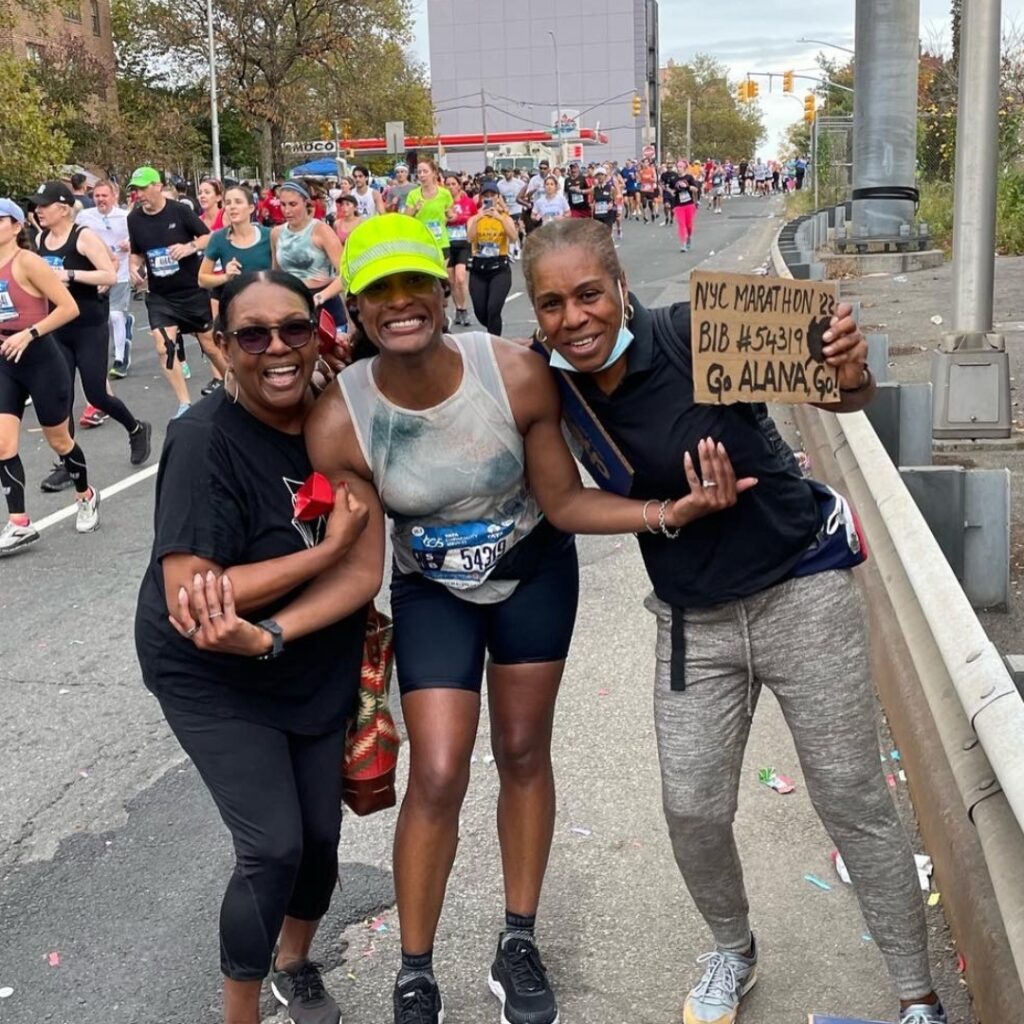
For the first time, Alana is experiencing running as part of a team through Project Purple, and that collaboration has transformed her perspective. “There’s something about being part of a group, all working toward the same goal, that makes you push yourself differently,” Alana shares. “I love hearing the stories of others, and I feel proud and compelled by the team. There’s such a wonderful spirit in the pride and joy people share when they see others take on something like this.”
Thinking about the finish line, Alana imagines the moment as intensely emotional. “I know that once I start running that race, she’s going to be with me the entire way,” she shares. “There will be a little bit of sadness that she’s not there for it, but an appreciation of wherever she is, she is watching and seeing me do this for her.”
Looking beyond race day, Alana hopes that running for Project Purple can help shift how pancreatic cancer is understood and discussed. “There’s still so much room to educate families about pancreatic cancer and what to expect,” Alana says. “This has been my first step toward finding community with others who have lost someone to the disease, and toward connecting my family to resources that support people through it.”
This experience has also pushed Alana to think differently about how she carries meaning into the world. She finds herself reflecting on questions like, What is my place in all of this? How do I show the value I place on life, people, and family? In the past, she imagined giving back as something tied to future milestones: career goals, financial stability, or time she didn’t yet have. Now, she sees it as something more immediate and intentional.
“This race has made me rethink how I can use my voice, my platform, however big or small, to bring awareness to things that matter to me,” she says. “Even if it’s just within my own community, that still counts.”
More than anything, Alana hopes her story encourages others to find their own way of showing up for the people and causes they care about. “The running is actually the least nerve-wracking part,” she laughs. “Putting yourself out there, being vulnerable, asking people to support something you believe in, that’s the hard part.”
Yet that vulnerability has already created a ripple effect, as friends and community members have shared her story and introduced Project Purple to new audiences. “Those little seeds start to grow,” she says, “and that all starts with being willing to say, ‘This matters to me.’”
The Importance of Representation
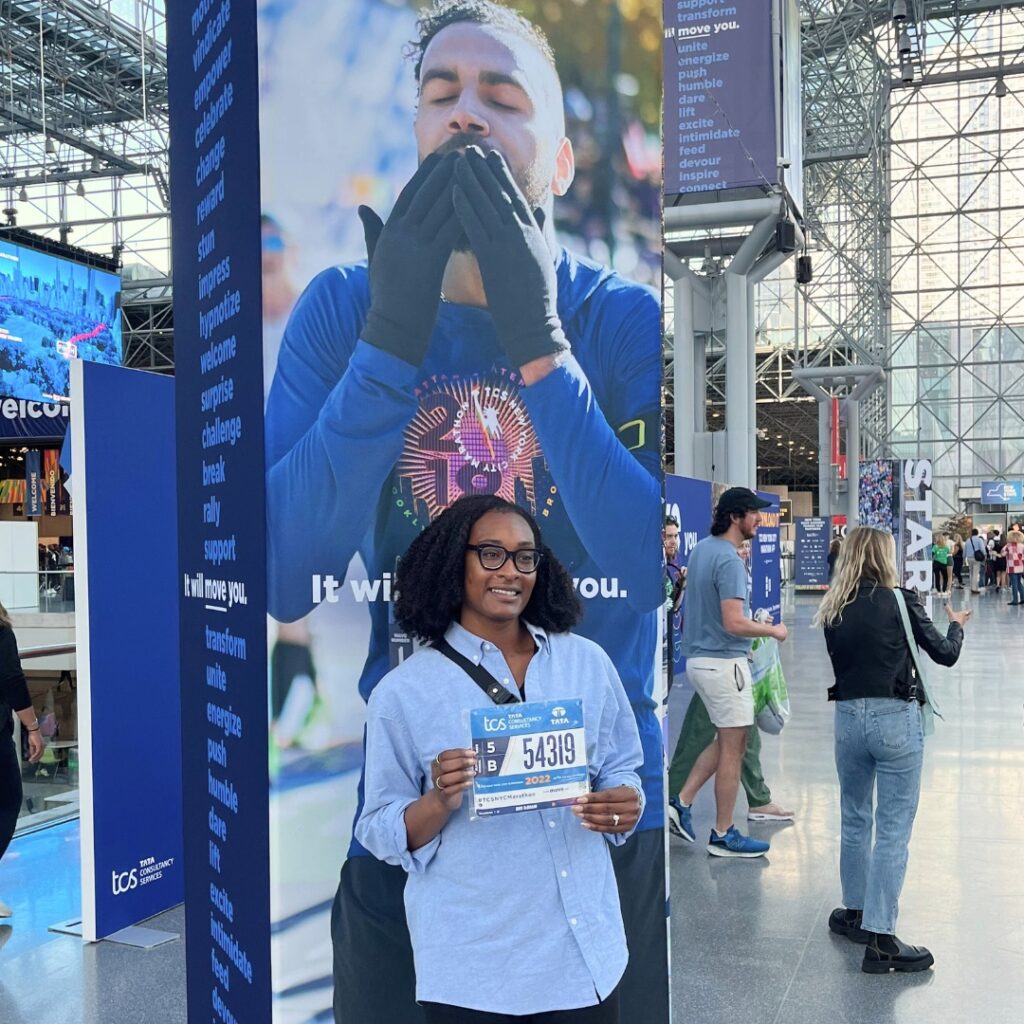
As a black runner, Alana also sees this journey as part of a larger conversation, especially during Black History Month, about inclusion, representation, and whose stories are celebrated within the sport. In her professional life, working in the Inclusion & Belonging space, she spends much of her time thinking about equity, access, and how systems can either welcome or exclude people. That lens carries into how she experiences running.
She finds inspiration in organizations and communities that center runners of color and challenge often narrow ideas of what a “runner” looks like. “I think it’s really important that running continues to be a space that welcomes different bodies, different speeds, different identities,” she shares. For Alana, fundraising adds another layer to that inclusivity: a reminder that every runner arrives at the start line with their own story, purpose, and definition of success, and that all of those stories deserve space.
For Alana, choosing to run the London Marathon for Project Purple was both a deeply personal decision and a step outside her comfort zone. “There was a little tug for me where I was like, ‘Well, should I put that out there? Should I be so public about not just her story and all of the pieces of that?’”
In the past, the family had been private about Carol’s illness, not because of embarrassment, but because those who they felt needed to know were informed.
The idea of sharing the journey publicly, fundraising for a cause, and announcing it to the world felt unfamiliar. But after talking it through with her husband, Alana realized that stepping into that public role is not just about visibility: it is about honoring Carol in a way that was meaningful and connected to her values.
To support Alana’s run in honor of Carol and to help raise awareness for pancreatic cancer, donate to her fundraising page here.
If you’d like to run or participate in an event of your own for Project Purple, visit our events page.