On the long, quiet stretches of road in Tampa, Florida, Erin Ruyle had always found clarity in motion. Running had been her constant through childhood, through the demands of trauma nursing, and through life’s daily pressures. But in April 2026, when she took to the streets of London, where every mile carried a different kind of weight. This time, she wasn’t just running 26.2 miles. She was running for Frank.
A colleague, mentor, and friend, Frank was the kind of person who left a lasting imprint on everyone he met. After his diagnosis with pancreatic cancer and his passing soon after, Erin knew she wanted to honor him in a way that reflected both his strength and his spirit. Running the London Marathon with Project Purple became that way forward: a journey of endurance, memory, and love.
The Making of a Runner
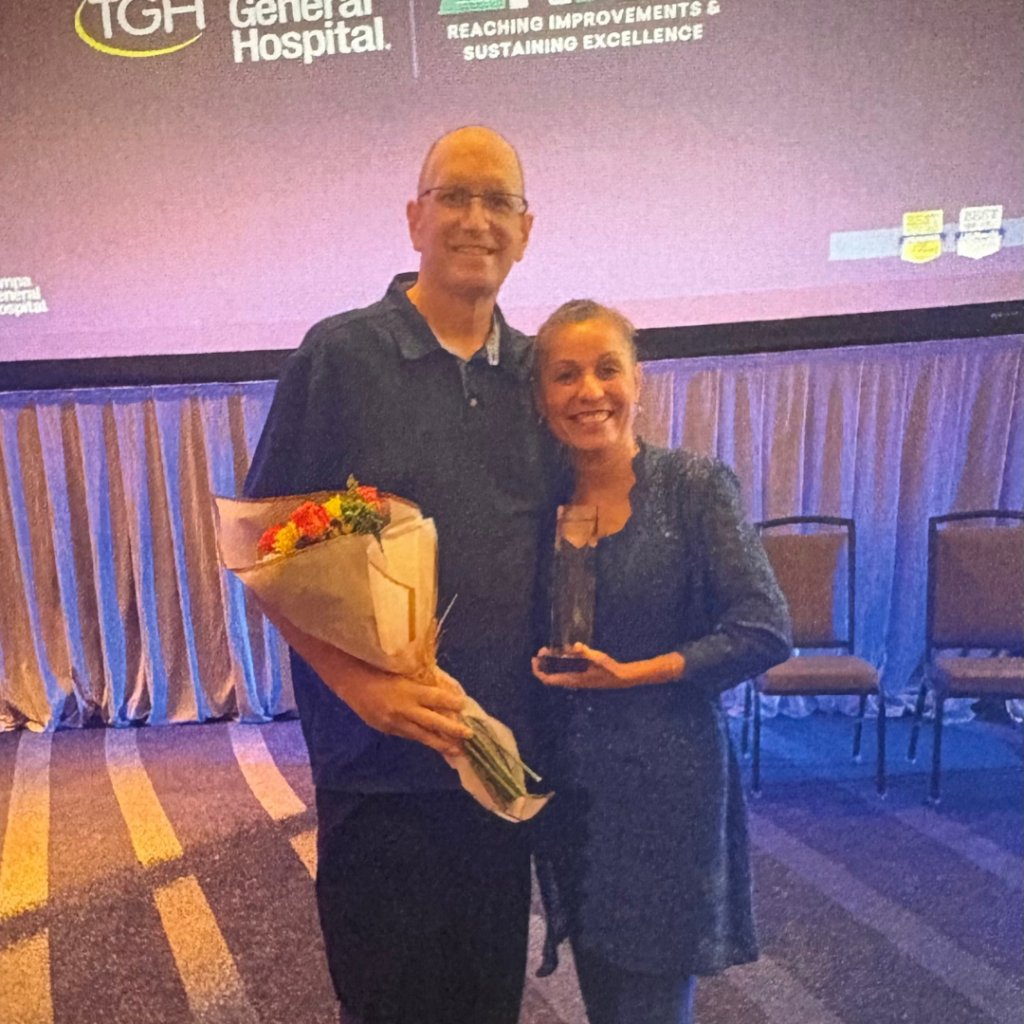
Erin’s relationship with running had started long before marathons entered the picture. Born and raised in Tampa, Florida, she described herself as “always the sporty, active one”: the youngest of five children who naturally gravitated toward movement. From tennis at three years old to soccer at six and softball at ten, sports shaped her early life.
She recalls playing soccer as the only girl on her team, yet still winning a race they held one day. Her mom often jokes that Erin “started walking and really just ran from there.” That early connection to movement carried into junior high, when a friend encouraged her to try out for the track team. She started with hurdles and shorter sprint events, but almost immediately felt at home on the track. “I just really liked running,” she says. “It just seemed to be what I was good at.”
What began as something casual quickly became something she pursued more seriously, as she progressed through high school competing in the 330-yard hurdles and the 4×800 relay, eventually reaching the state level. From there, running deepened into a defining part of her identity. Erin went on to Western Carolina University on a track and field and cross-country scholarship, continuing to develop her athletic career, while also discovering how much the sport offered her beyond competition.
Running, she realized, wasn’t just about performance: it was about clarity. “If I have a bad day, I go for a run, and I can think things through. It calms me down,” Erin shares. She adds that part of what she loves about running is that sense of solitude: being alone with her thoughts, without having to constantly process the world around her the way she does in her job as a trauma nurse.
“In my job, your hardest day is my everyday,” Erin shares. “I’ve had to learn to compartmentalize a lot of emotions so I can move on to the next emergency. Running helps me process the bad days.” The feeling she gets after a run is often hard to put into words. “People talk about runner’s highs,” she says. “I really believe I get that. It feels like an energy is coursing through me.”
In October 2023, Erin ran her first full marathon in Chicago, and just a month later, after getting into two lotteries in the same year, she also ran the New York City Marathon. Even after those two back-to-back races, she kept going. It hasn’t even been three years since she entered the marathon space, but she is now training for her fifth marathon. “It’s kind of addictive,” she admits.
But along the way, running stopped being just about her. What had always been a space for clarity and release began to take on a different kind of meaning: shaped by her work, her community, and, ultimately, her colleague and friend Frank.
Frank: The Calm in the Chaos
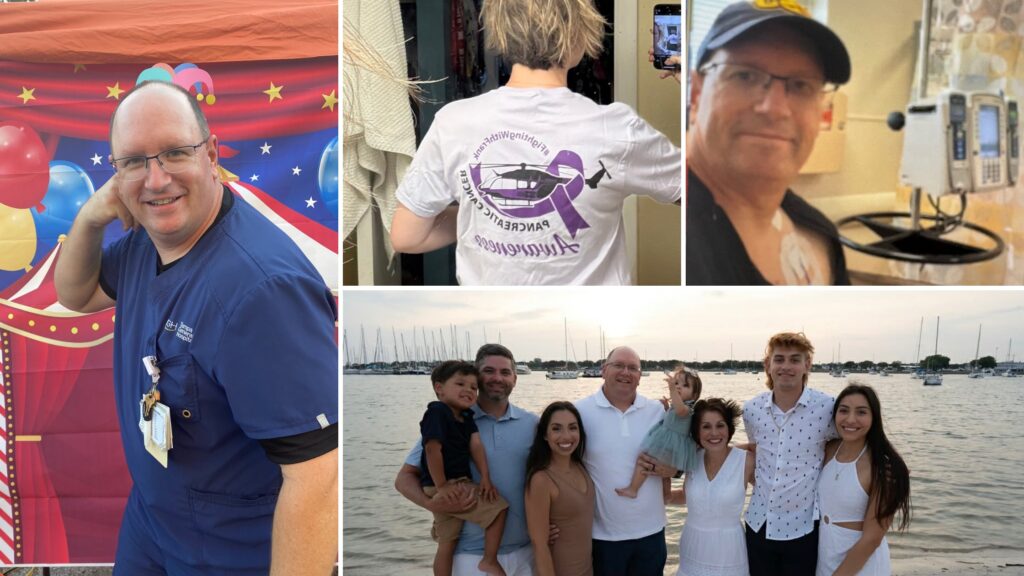
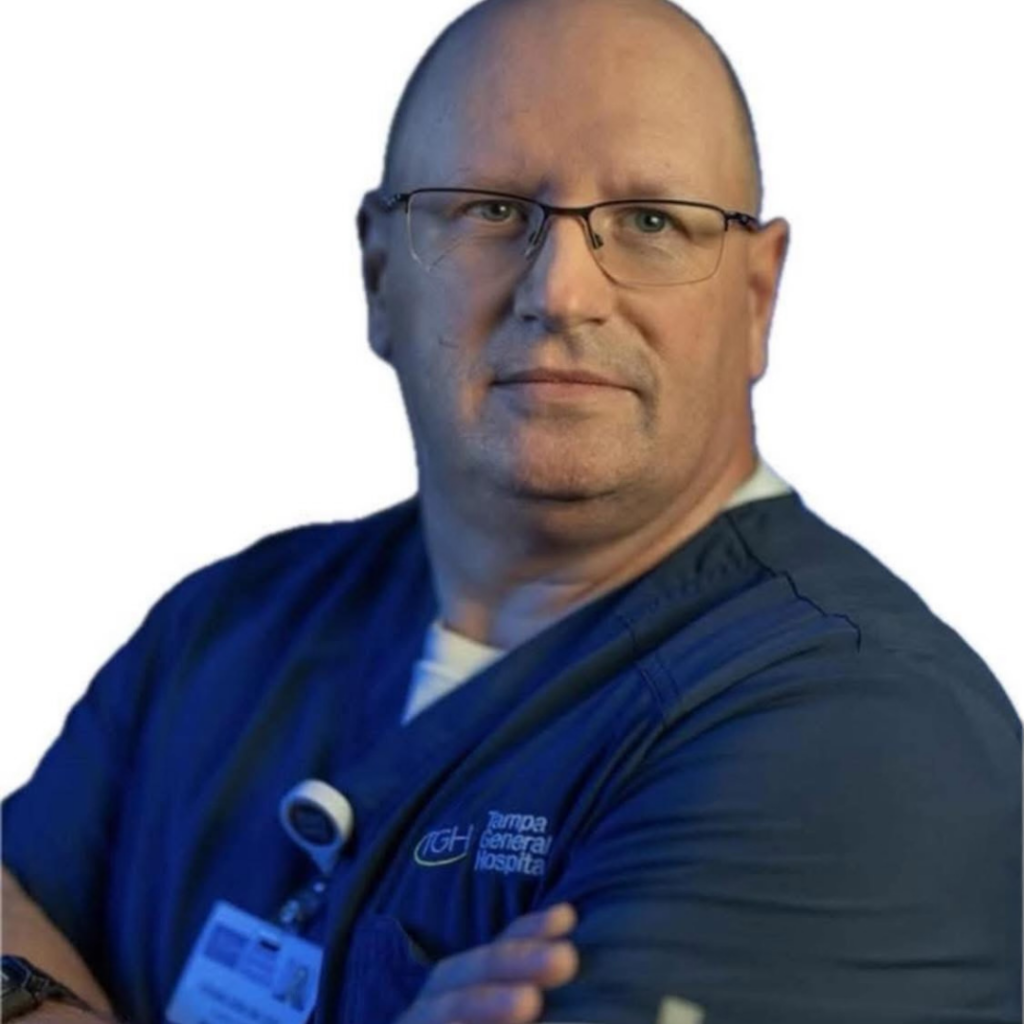
Frank was, in Erin’s words, the kind of person who anchored an entire department. As the lead trauma nurse at Tampa General Hospital, he was the one everyone turned to: the most experienced voice in the room, the person new nurses were trained by, and the colleague who seemed to know how to handle everything. “Frank was the best of us,” Erin reflects.
But what stood out most wasn’t just his expertise: it was his presence. Frank had a way of making people feel immediately at ease, even in the most chaotic moments of the emergency department. For Erin, that comfort translated into something simple but meaningful: trust. “I remember the first time I met him,” she shares. “I felt like I already knew him.”
In a setting where emotional strain is constant, they also leaned on what staff called “Code Lavender”: an informal way for nurses to pause and support one another after difficult moments, and Frank was always there for Erin in those moments. “He’d just open his shoulder,” she shares, “and I’d rest my head there, he’d put his arm around me. It was a quick reset—like, ‘Okay, things are going to be okay.’”
Frank was a steady source of grounding for the entire department. “We called him Father Frank because he was a father to us all,” Erin says. “He always put everyone else first.” That same mindset carried through not only in how he worked, but in how he approached his own health, something that would later become central to his story.
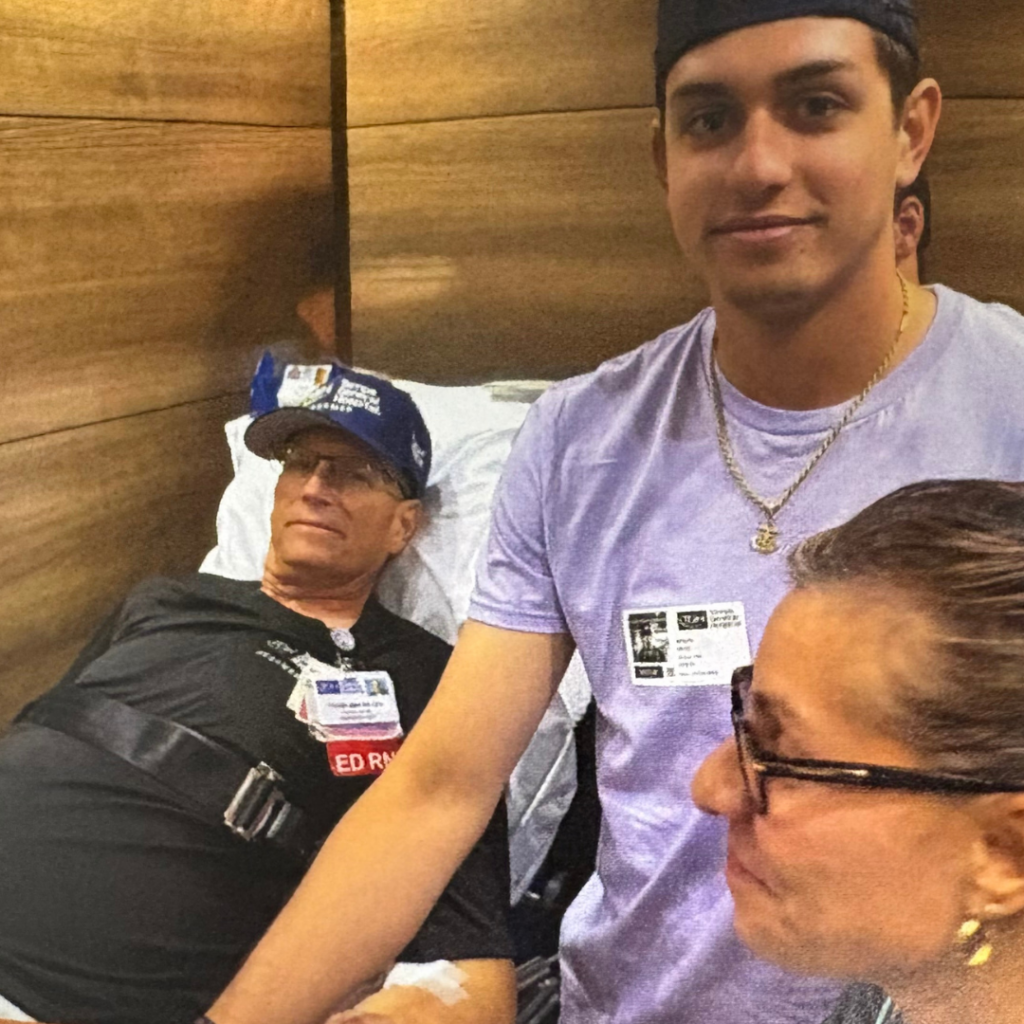
In early 2025, while working in the trauma bay, he began experiencing significant abdominal pain. True to form, he pushed through it at first, reluctant to step away from his team. “He didn’t want to let anybody down,” Erin remembers. “That was just who he was.” Eventually, his colleagues convinced him to get checked. The results came back quickly and devastatingly. Within the same day of his initial evaluation, while still at work, Frank received a terminal diagnosis: Stage Four pancreatic cancer that had already spread to his liver and lymph nodes.
“He wanted to fight,” Erin says, even as the prognosis remained grim. Even through his illness, Frank wanted to keep working in whatever capacity he could. “He talked about, if anything, doing paperwork or auditing charts, just something, because he wanted to still be active and still be working.” Unfortunately, he was never able to return to work as his condition worsened. Surgery was not an option, and although he was later placed in a clinical trial, he experienced significant setbacks that brought his treatment to an end. Ultimately, Frank passed away on June 16, 2025.
What It Meant to Show Up
During Frank’s battle with pancreatic cancer, Erin began looking for a way to honor him beyond the hospital walls: something that would eventually lead her to Project Purple, the London Marathon, and a new kind of purpose in her running. When she was signing up for what would become her fifth marathon, she came across an option to search for a charity to run for.
That’s when she found Project Purple, and something immediately clicked. It offered a way to do two things simultaneously: run another marathon while also honoring Frank, supporting his family, and carrying forward what he stood for. Erin immediately reached out to Frank and told him about her plan to run in London in his honor. His response was simple and typically Frank: “That is very sweet. Best of luck. When is it?”
Unfortunately, it wasn’t until after Frank’s passing that she was officially confirmed to be on the Project Purple team. In the months that followed, Erin stayed in close contact with Frank’s wife, Maria, who also works at the hospital as a PACU nurse, and made sure to get her blessing before moving forward. “I wanted her to be as much a part of this as anyone,” Erin shares.
Thinking of Frank’s family has remained a powerful source of motivation for her: a reminder of what he valued most. “Family was everything to him,” Erin says. “It was a huge part of who he was.” He had two daughters, a son, and two grandchildren, and he loved his wife with everything he had. “It means a lot that I have his family behind me,” she adds.
While Frank’s family remains at the heart of what motivates Erin, they are only one part of the far-reaching legacy he left behind. After Frank passed, Tampa General Hospital honored him by establishing the Frank Fritz Scholarship Fund for emergency and trauma nurses seeking to further their education, with a goal of raising $75,000 in support of his legacy. The hospital also pledged that once that goal was reached, the trauma bay would be named in his honor. It was achieved quickly: an outpouring that reflected just how profound Frank’s impact was on both the department and the wider community.
That same sense of support defined Frank’s fight as well. Within the department, colleagues came together to donate money to help cover medical expenses, bring meals to his family, and coordinate transportation to Moffitt Cancer Center for treatment. They called themselves “Frank’s Fighters”: a collective effort to ease the burden on his loved ones in any way they could.
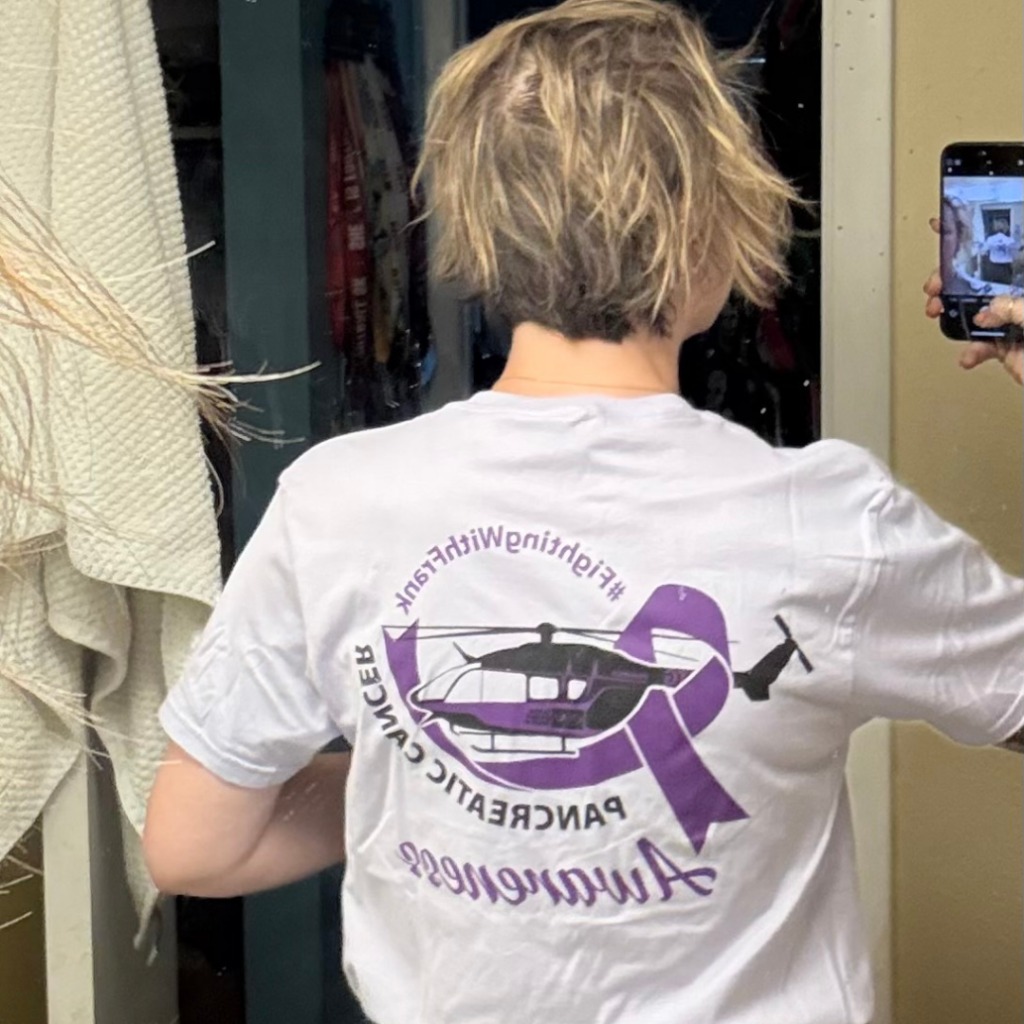
So when Erin began fundraising for London, the outpouring of support came as no surprise. “I knew it wouldn’t be a problem. Everyone loved Frank, I mean everyone,” Erin says. “You don’t often see a hospital system rally behind someone the way they did for Frank.” Frank’s wife, Maria, who has access to his Facebook page, regularly shared Erin’s fundraising link there, helping extend that support even further. “I felt like everyone was supporting me too—that I wasn’t the only one running London. Everyone else was too. And we were all doing this for Frank,” she adds.
All Roads Leading to London
In the months leading up to London, training took on a different rhythm for Erin. She was still building mileage, balancing long runs with 12-hour trauma shifts, but the intention behind every run had shifted. “I felt more inspired,” Erin says. “There was more of a drive.” Especially on the hard training days after long shifts, it became a matter of mindset. “On days I didn’t want to run, I thought of him and why I was doing it,” she adds. “I learned that I am stronger than I thought I was.”
That mindset carried directly into race day. One of the things she says she held onto most was Frank’s never-ending optimism. “I truly believe he was with me on April 26th,” Erin says. “I think his voice was the one telling me to push through. He would never give up.”
The marathon itself became a familiar mental battle: one every distance runner knows, but this time filtered through grief, memory, and purpose. “You go from ‘Why did I do this?’ to feeling amazing, and then back again, and then feeling amazing again,” she says. Looking back, Erin connects that endurance to what she had witnessed in Frank: “A marathon seems next to nothing compared to the battle that Frank was going through.
But what has stayed with her most is not only what Frank endured, but what he continues to create. In the aftermath of his passing, his presence has continued to connect people in unexpected ways. One of Frank’s former high school classmates saw Erin’s fundraiser on his Facebook page and reached out to her. She had also chosen to run a marathon in his honor, and the two quickly formed a friendship that continues today. “She said it best,” Erin reflects: “‘Look at Frank still bringing people together. He’s still connecting people.”
That sense of connection also extends into how Erin now views pancreatic cancer itself. Having seen it up close, she is direct about what she wants people to understand. “It can happen to anybody,” she says. “Frank was the best of us, and it took him from us.” She emphasizes the importance of listening to symptoms, understanding genetic risk, and not delaying medical attention.
For Erin, her fundraising work with Project Purple connected strongly with the realities of the disease. “I like the idea of a charity that wants to do more than just research,” she shares. “Project Purple wants to help families as a whole. That is something Frank always did—he helped the whole family, not just the person.”
Looking ahead, Erin hopes to embody Frank’s presence in her own work. She plans to continue running, eventually completing all seven World Marathon Majors twice, but more importantly, she wants Frank’s influence to carry into the next generation of nurses she teaches and works alongside. “I want my students to know they are loved,” she says. “I want my coworkers to come to me the way they came to Frank, as a trusted advisor, a friend, and someone who has their back.”
For those navigating grief or looking for ways to honor someone they’ve lost, her advice is simple: find an outlet and keep moving forward. “Whatever it is—running, faith, anything—find a way to carry them with you,” Erin shares. For her, that is exactly what running has become: not escape, but continuation. The “Frank’s Fighters” support network remains very much alive, a way to keep Frank’s legacy in motion, mile after mile, and person to person.
You can still support Erin’s run in honor of Frank and help raise awareness for pancreatic cancer by donating to her fundraising page here.
If you’d like to run or participate in an event of your own for Project Purple, visit our events page.