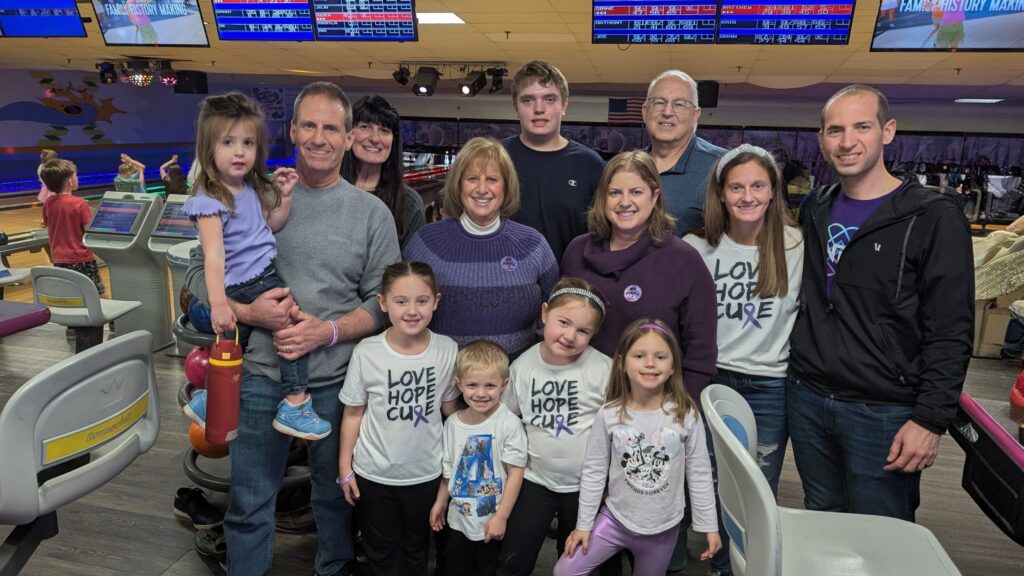
On March 22nd, 2026, the Boonton Lanes in New Jersey were filled with something deeper than a typical Sunday crowd. Friends, family, and community members gathered not just for a simple game of bowling but to honor the life of Ellen Schmitt, a devoted wife, mother, and grandmother.
Ellen loved bowling, but she loved her family even more. After losing her to pancreatic cancer in 2025, her family found a way to bring those two things together. With the help of Project Purple, they created a community event that honors her life, supports critical research, and reflects the joy and connection she brought to everyone around her.
Interested in hosting your own Community Event for Project Purple? Contact us here or check out our Community Events page for inspiration!
Bowling and Being Together
Long before it became the centerpiece of a fundraiser, bowling was simply something Ellen loved. She had been bowling since she was young, even participating in leagues up until she was pregnant with her children.
After that, it became something she did for fun, but her enthusiasm never faded. Whether it was a casual night out or a family gathering, Ellen brought the same energy and competitive spirit every time.
Gerry, Ellen’s husband, recalls when they first met, working together at a movie theater. After their shifts, they would sometimes go bowling with coworkers. “She kicked my butt every time we bowled,” he laughs.
That competitive streak carried over through the years, but what mattered most to Ellen wasn’t winning: it was being together. Family was at the center of everything she did.
Melissa, the middle child of the three Schmitt kids, remembers a birthday party for her daughter Mikayla at a bowling alley. While many of the adults stood off to the side, Ellen had no interest in sitting out. “She said, ‘I don’t care if nobody else is bowling,’” Melissa recalls. “She wanted to bowl with everybody.”
That moment, small as it may have seemed at the time, perfectly captured who Ellen was. She showed up. She participated. She made memories.
At Ellen’s services following her passing in 2025, the Schmitt family recalls the funeral home asking if they had a cause they wanted to support in lieu of flowers. That conversation sparked the idea to support an organization dedicated to fighting pancreatic cancer. When they discovered Project Purple and learned they could create their own community event, the decision to do so felt natural, but the question remained: what kind of event would truly honor Ellen?
“We went through a lot of different ideas,” adds Eric, the youngest, “like a painting event.” But none of them would have captured Ellen the way they wanted. And when bowling came to mind, they knew it was the perfect fit.
As Melissa explains, “We went through a few ideas and said, ‘You know what, Mom loved bowling! She even had her own bowling ball.’” Bowling was fun, family-friendly, and something she truly loved, making it an ideal way to bring people together and fundraise. Eric adds, “This was a happy medium: something simpler to put together as a first fundraiser, and it just made sense because it was something she always loved to do.”
“Ellen was always big on family, so this event was not just geared to adults; it was a whole family fun event,” Gerry says. “More than anything, any sort of family event, she was always ready to go and participate, and that’s what she loved: having everyone together, friends and family, and just having a good time hanging out,” Eric adds.
Bowling, with its mix of friendly competition and easy accessibility, was the perfect choice: children, grandchildren, friends, and neighbors could all participate, have fun, and be part of something meaningful. And for Ellen’s family, it wasn’t just about fundraising: it was about creating a shared experience where everyone, regardless of age or skill level, could celebrate her life and the joy she brought to everyone around her.
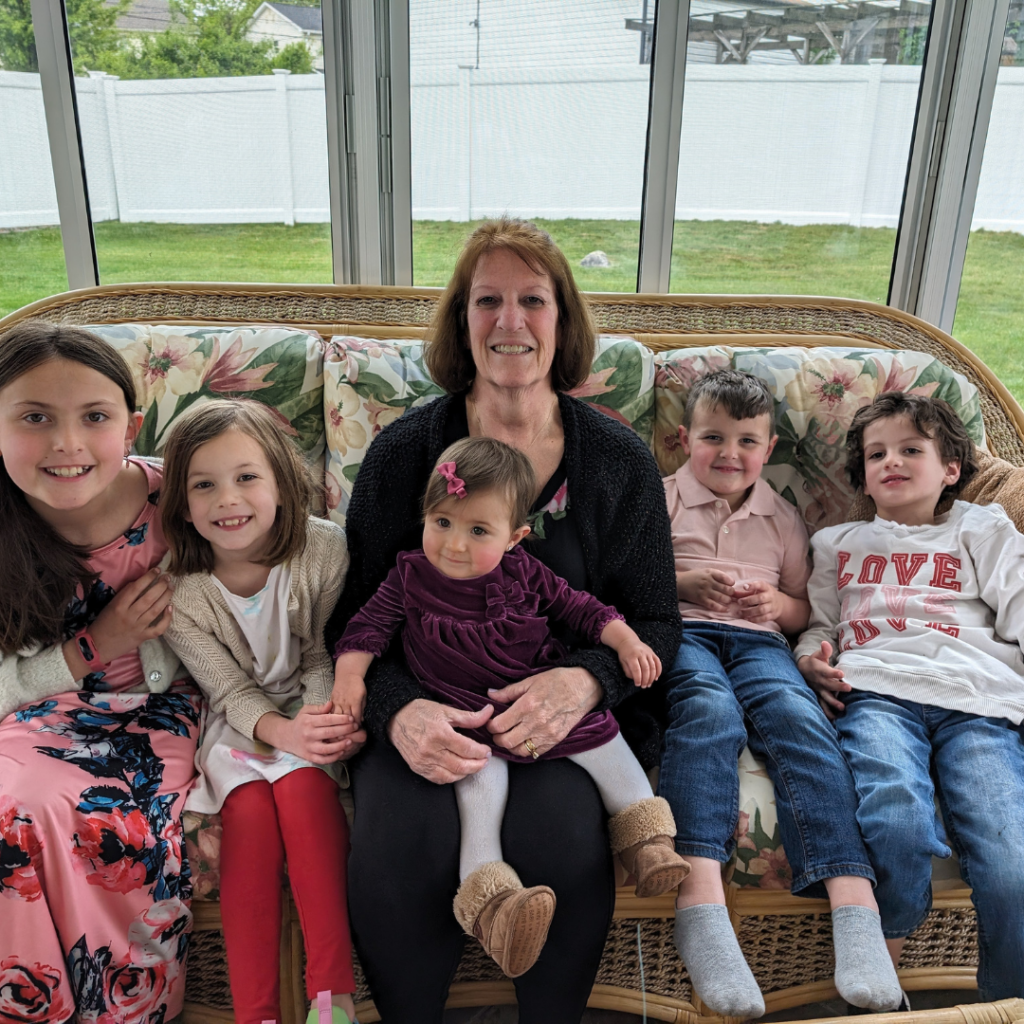
From Uncertainty to Advocacy
Ellen’s pancreatic cancer journey did not begin with a clear diagnosis. Like many others, it started with symptoms that seemed unrelated. It began with back pain, nearly ten months before she passed.
Doctors initially believed it was something orthopedic, possibly a herniated disc. She underwent test after test, tried physical therapy, and even received epidural injections. Nothing worked. Instead, her condition slowly worsened.
“She was on many medications that made her sick,” Melissa recalls. “She wasn’t eating, and she was losing her appetite. Now we know this was cancer taking its course, but at the time, they always thought it was something other than that.”
As the months went on, the answers never came. Eventually, when her condition became severe, the family brought her to the emergency room.
“She came to me about a month before she passed,” Gerry says, “and she said, ‘I think I have pancreatic cancer,’ because she had every symptom.” A CT scan finally revealed the reality: a mass on her pancreas that had already spread to her liver and bloodstream. There were no treatment options left.
Within two weeks of her diagnosis, Ellen passed away. Looking back, the family couldn’t help but wonder—after Ellen waited nine months for a CAT scan—if the cancer might have been detected sooner. These thoughts stayed with them, shaping their commitment to advocacy.
“The one thing that probably would have saved Mom is having the disease detected earlier,” Jason, the oldest, explains. “And that is what brought us to Project Purple, because they specialize in early detection research.”
For months, Ellen’s symptoms were treated individually, but the underlying cause remained undetected: a reality that brought frustration and heartbreak to the family. That experience has now become the driving force behind their efforts. As Jason puts it, they wanted to find a way to honor their mom’s life and turn a horrible situation into something that could hopefully help others.
That motivation led them to participate in Project Purple’s Virtual Events Series even before the bowling fundraiser took place in March. As a family, they completed all three events: Purple Paddy’s, the Independence Day Double Mile, and the Turkey Trot. Through these events, they experienced firsthand the support, camaraderie, and shared purpose that come from joining others in the fight against this aggressive disease.
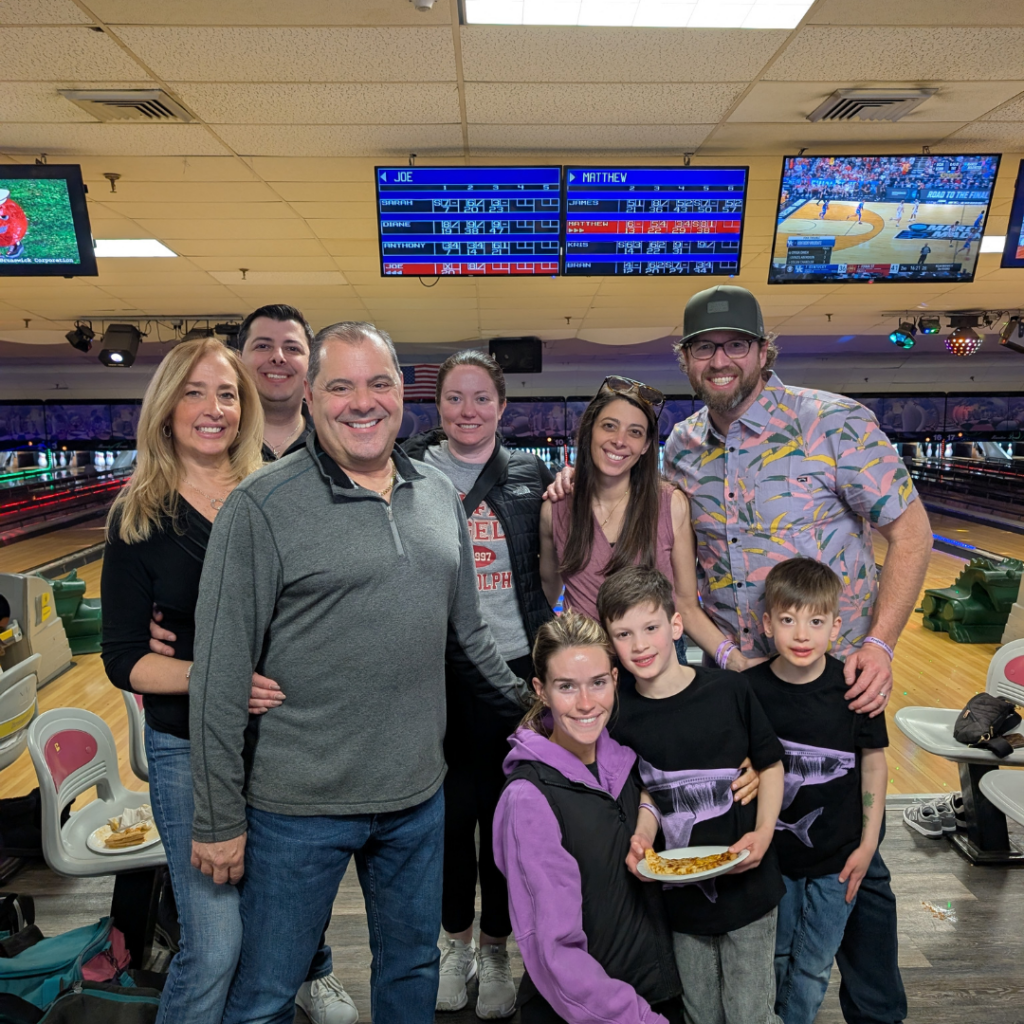
Strikes, Smiles, and a Legacy of Presence
When the day arrived, the alley came alive with laughter, cheers, and the unmistakable buzz of a community coming together. The alleys were filled with around 100 people of all ages, from toddlers taking their first steps toward a lane to seasoned bowlers alike. Every strike and spare echoed the joy Ellen had always shared with those around her.
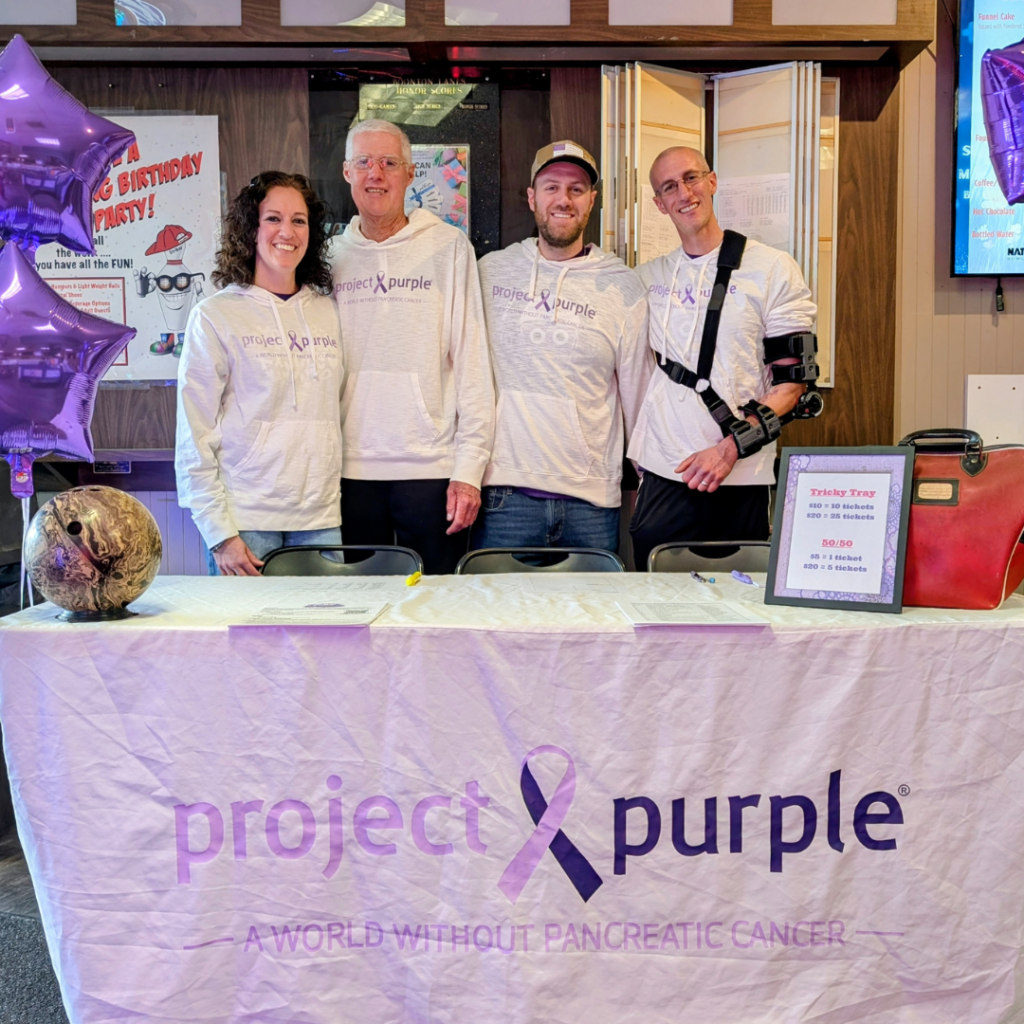
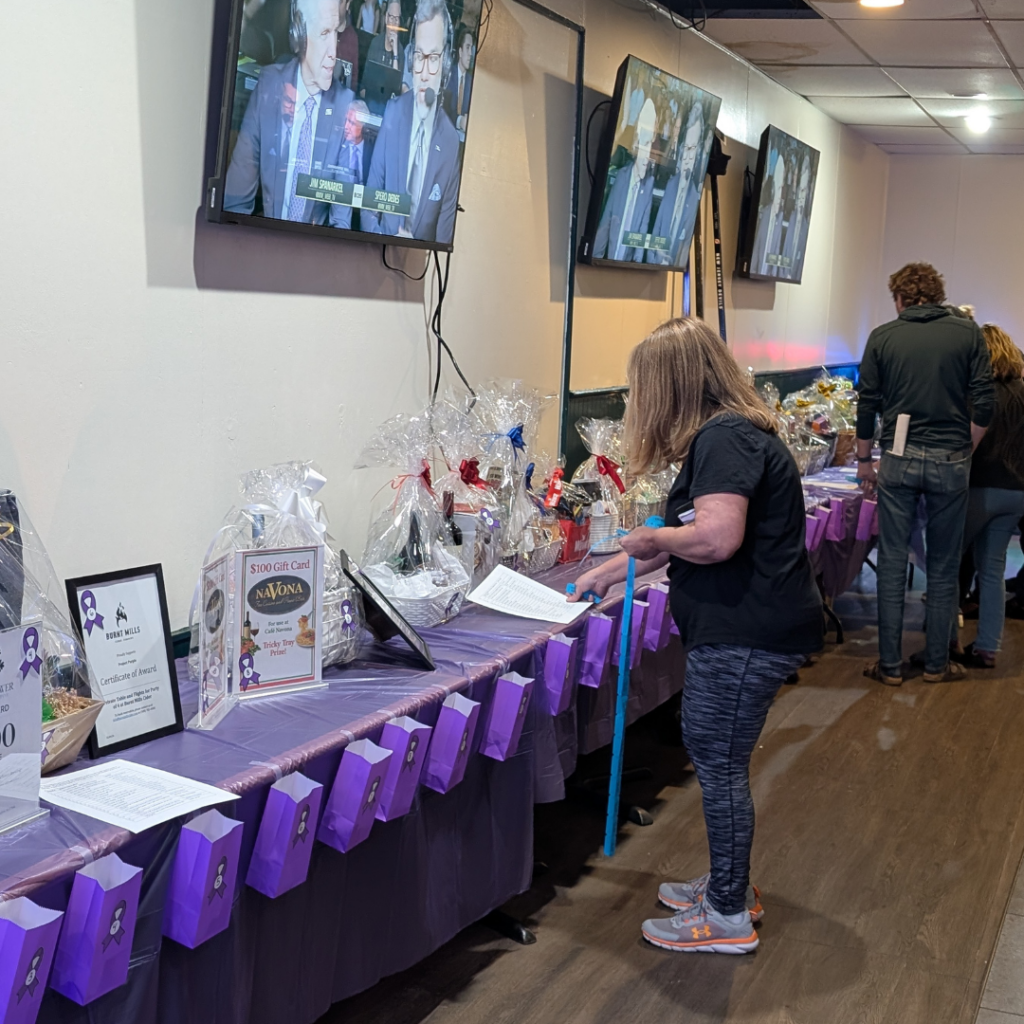
Lanes were organized into groups, ensuring friends, family, and neighbors could all participate together. Shoes were laced, bowling balls selected, and the friendly competition began, with challenges like the red pin, highest score prizes, and a 50/50 raffle adding extra excitement. Food and drinks were provided, like a special purple drink, along with a “tricky tray” raffle to raise additional funds for Project Purple.
And as much as it was a fundraiser, the event was also a celebration of Ellen’s personality. She had always been someone who showed up, whether for a grandchild’s concert, a school sporting event, or a family gathering. Her commitment to family and community shone through in every interaction that day.
“She never wanted to miss a family event,” Melissa recalls. “She attended everything and made sure she was there to support us and her five grandchildren. That’s who she was: always present, always supportive.”
The boys remember that as teenagers, Ellen was always at their sports games, even though she knew little about the sport. “Support is the biggest word that comes to mind,” Eric says. “Whenever I was on the tennis court, she was always on the sidelines. If I cheered for a point, she cheered with me. She was there to support, no doubt about it.”
That support extended beyond her family, too. Ellen worked as a Kindergarten aide, and even during her illness, she showed up for the children. “She worked through her sickness,” Melissa recalls. “Even when she was weak and having trouble walking, she made it to work every day. That’s who she was.”
Gerry adds, “Even during that whole year when she was having symptoms, I said, ‘Why don’t you take some time off?’ She said, ‘I don’t want to.’” When she passed, the school revealed she had 150 sick days saved up because she rarely ever took time off. She loved being there.
“I like to use the word commitment because that’s exactly how Ellen was, between work, friendships, but mainly family,” Gerry adds. And that commitment was on full display that day.
Memory in Motion
In the days following the event, the Schmitt family had a chance to reflect on what the day truly meant as a living, breathing part of their grieving. “It helped us keep her memory with us,” Melissa says. “It was about knowing who she was and remembering that she was more than pancreatic cancer,” Eric adds.
Jason emphasizes this deeper meaning behind the effort: “Everyone handles these situations differently. There’s no wrong answer, but doing something to honor a person’s life keeps their legacy alive.” And with every cheer, every strike, every burst of laughter that echoed through the lanes, that idea felt undeniably true. They pictured Ellen grabbing her bowling ball, offering pointers, and helping everyone keep their ball straight.
Beyond the lanes, the day brought the family even closer together. “It has helped us turn a painful situation into something positive,” Jason says. “We’ve always been a close family, but this gave us a shared purpose to work toward together.” He adds, “One of our mom’s greatest traits was her willingness to help others. This is one way to keep that legacy alive: supporting research so families in the future can save loved ones.”
Ellen’s generosity seemed to spread through the community, as family, friends, and local businesses came together to contribute. “Doing the tricky tray, reaching out to businesses, and sharing our ‘why,’” Melissa says, “showed us that so many people know someone affected by pancreatic cancer and want to help however they can.”
In the end, the alleys, cheers, strikes, and spares stood as a living testament to a woman who loved fiercely, gave endlessly, and filled every room with joy. Through laughter, community, and shared purpose, Ellen’s memory rolls on with every ball down every lane. Gerry smiles, imagining her final nod of approval: “She would have said to me, ‘Gerry, we did good.’”
Inspired by the Schmitt family’s story? Visit our Community Events page to learn how to organize your own fundraising event and join the movement.