For Kyle Aikman, the Boston Marathon isn’t just a race; it’s a homecoming. This spring, he will take on 26.2 miles through a city that shaped family traditions, his love of sports, and his identity. More importantly, it’s a city deeply tied to his Uncle Dennis, a central figure in Kyle’s life who passed away from pancreatic cancer in 2024.
As Kyle runs through the streets of Greater Boston, he will do so in partnership with Project Purple, honoring his uncle’s memory while raising awareness and funds to fight pancreatic cancer. Each mile is both a tribute and a commitment: to family, to home, to remembrance, and to a cause that now runs alongside him.
Competition and Commitment
Kyle’s journey into running didn’t start with a dream of marathons or races. It started with a New Year’s Resolution in 2023: simply to get on the treadmill. Fresh out of college and newly living in New York City, he was looking for a way to stay active that was accessible and affordable. “Running was one of the cheaper activities I could get into,” he recalls with a laugh.
What really sparked his progression into running was a friendly challenge with a friend, his college roommate, who he now works with. With both of them being naturally competitive, the two quickly fell into a rhythm of pushing each other to improve through various running challenges. “For the past three years now, we’ve been in an arms race of trying to out-best each other in a 5K, a marathon, or anything like that,” Kyle shares.
That competitive nature isn’t new to Kyle. Being a younger brother, he says, has always shaped how he approaches challenges. “My older brother is four years older, and for as long as I can remember, we had all these petty competitions,” he explains. “It’s not about beating him anymore, but it’s always given me a chip-on-the-shoulder mentality that I carry into most aspects of my life.”
Running, he says, has been a natural way to channel that lifelong competitiveness into adulthood. “My biggest competitor is myself,” Kyle adds. “I’ve done two half marathons now, and there’s a lot of reward in not having a running background. So every time I set a new personal record, it’s incredibly gratifying. I’ve really made running my own competitive space.”
He also works in finance in New York, and running has become his refuge from the fast-paced, high-pressure nature of the industry. “Sometimes I won’t even put in headphones,” he explains. “I just run in silence in the dark of New York and sort through my thoughts, whether it’s procedural things I want to work through from the day, or personal matters that I need to think through.”
So when his friend ran the New York City Marathon in 2024, Kyle realized he wanted to take on a full marathon of his own, but the specific race had to be meaningful and one he felt confident in. “I wanted Boston to be my first marathon, being from Massachusetts originally,” he says. “And I don’t just want to finish one, I want to run one at a cool time.” This choice became even more personal after his Uncle Dennis’ battle with pancreatic cancer, giving Kyle’s running a deeper purpose beyond personal goals.
Lessons from Uncle Dennis
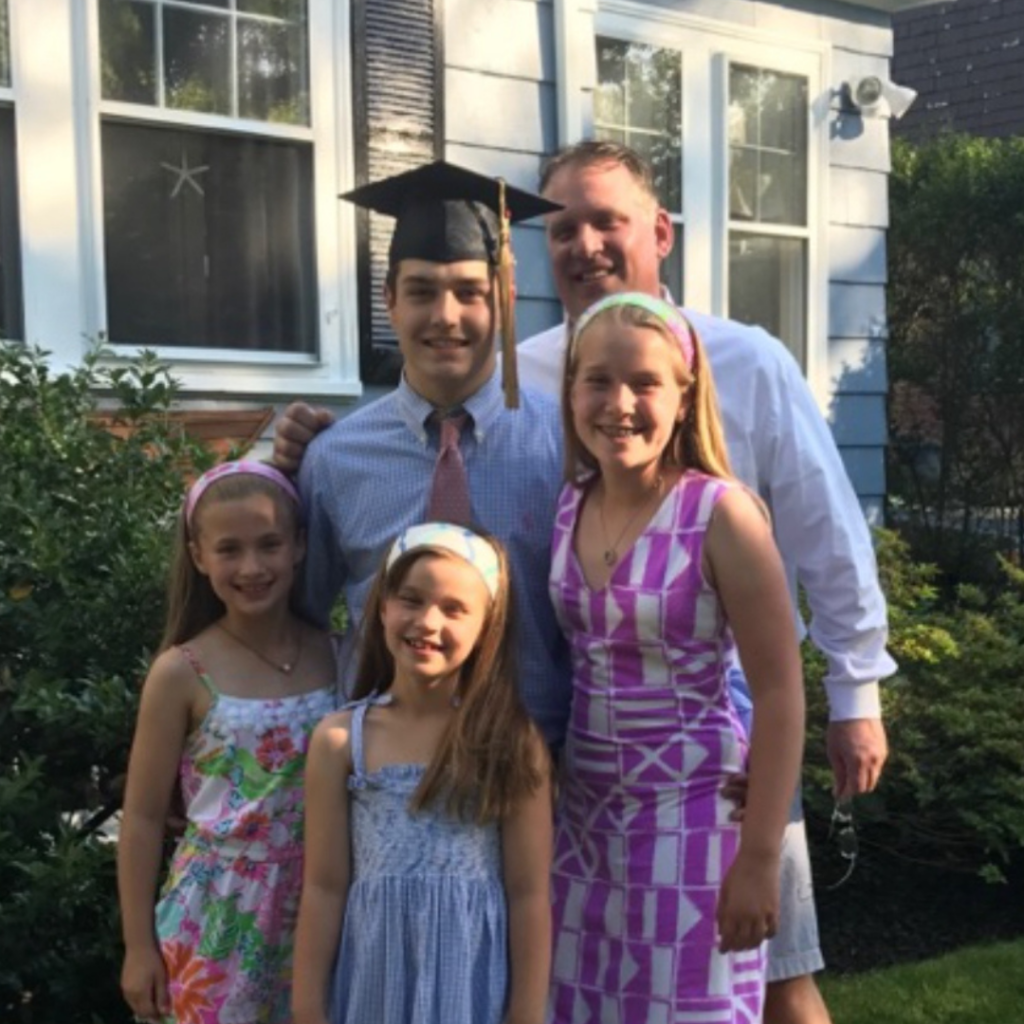
For Kyle, Uncle Dennis was more than just an uncle: he was a guiding presence, a mentor, and a central figure in the Aikman Family. He was extremely close to him, noting that, “Uncle Dennis was the closest thing that I can imagine to a third parent figure.”
Even beyond his role in the family, as a loving father to three daughters and a devoted husband, Dennis left a lasting mark on everyone he met. Kyle reflects on the many lessons he learned from his uncle, saying, “It really boiled down to three things, which I model my life after. I did this before he passed and even before his battle with pancreatic cancer, because I think it’s a good outlook on life.”
Dennis always led with kindness, meeting challenges and people with generosity rather than anger. Kyle always looked up to his uncle, admiring how he handled every situation with patience and a calm, generous spirit. Today, Kyle carries that approach into his everyday life, always “trying to meet someone in that regard instead of making the problem worse.”
He also lived by the phrase, “don’t take yourself too seriously.” Kyle recalls how his uncle was, as he puts it, “notorious for just embarrassing his daughters, embarrassing me, doing wacky things like dancing in public just to make someone laugh that he saw randomly in the streets.” But these weren’t just ridiculous acts with no significance; they taught Kyle that being confident in yourself and owning how you want to be perceived is incredibly powerful. As Kyle says, “It’s led me to, whether it’s a work setting, friend setting, anything else, just be as authentic as I can to myself.”
And then there was his humor. Dennis was, in Kyle’s words, “the actual king of dad jokes.” Every Christmas, Dennis would receive at least four or five dad joke books or a dad joke calendar, a testament to his playful sense of humor and love for making others laugh. They truly were his thing, and Kyle and his family have come to deeply miss those jokes, even though Dennis would, as Kyle puts it, “beat a dead horse with those jokes every single time I saw him.” But they were quintessentially Dennis, and even at his celebration of life, the rabbi opened with a dad joke, showing how everyone knew his sense of humor.
Kyle’s admiration for his uncle took on a new dimension in 2022, when Dennis was diagnosed with pancreatic cancer. That summer, Dennis appeared jaundiced at first: a hue that initially looked like a tan, but soon became unmistakably serious. A hospital visit confirmed what they feared: pancreatic cancer. In hindsight, months before, Dennis had been experiencing persistent, acute back pain, one of the early symptoms of the disease.
He began treatment with chemotherapy, which initially responded well and shrank the tumor enough for him to qualify for the Whipple procedure. After the surgery, there was a moment when it seemed as if they might be in the clear. But the cancer later resurfaced in his liver, and it was ultimately deemed terminal.
In May of 2024, Dennis passed away, leaving behind the mark of a life well-lived. But the qualities Kyle carried from his uncle, combined with the pain of his loss, gave running a new purpose. It became about honoring Dennis, not just a personal challenge, turning his love into action through running for a cause that mattered.
Boston Roots and Family Ties
Kyle knew he wanted to run for a pancreatic cancer charity, but that realization didn’t happen overnight. He recalls a moment on a cold December night, running along Manhattan’s West Side Highway before his uncle passed, when he thought to himself that he wanted to do something in his honor, alive or passed on.
He also never thought he would ever run a full marathon. Kyle remembers the first fall after moving to New York City, watching people run the marathon in 2021 and thinking to himself, “I could never do that.” But after years of getting into running, he realized the desire had always been there, and it was not until the 2025 Boston Marathon, watching his friend run, that Kyle decided to make it real. Inspired that day, he DM’d Project Purple on Instagram.
As soon as the thought entered his mind, he knew he had to do it. “I’m a very forward person when it comes to planning, so when I set my mind on something, it’s very hard for me not to focus on that until it’s off my checklist, and this was a big one!” he explains. The choice of the 2026 Boston Marathon with Project Purple held special meaning for Kyle, combining both a pancreatic cancer mission and a Boston connection that reflected his uncle’s life and legacy.
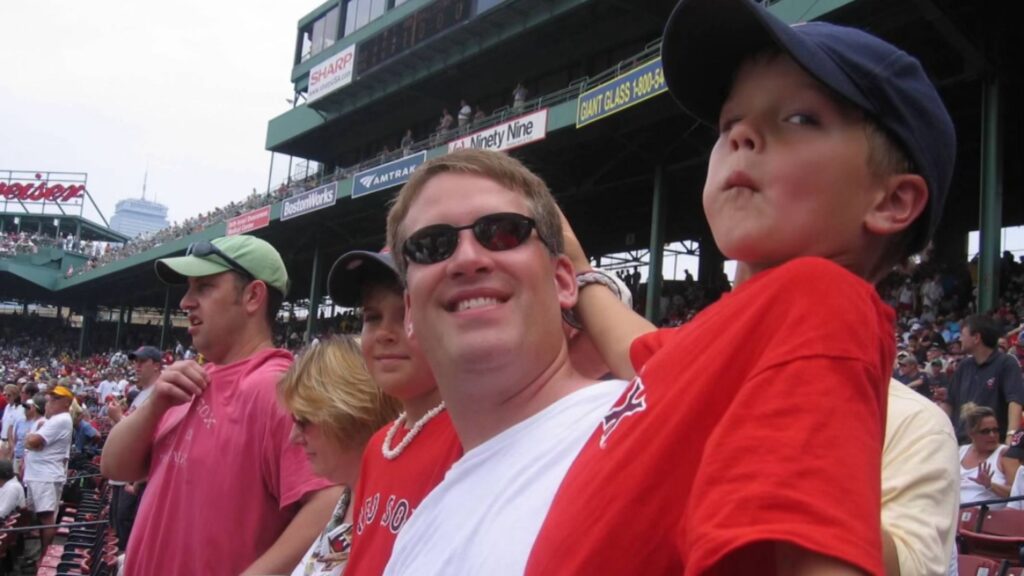
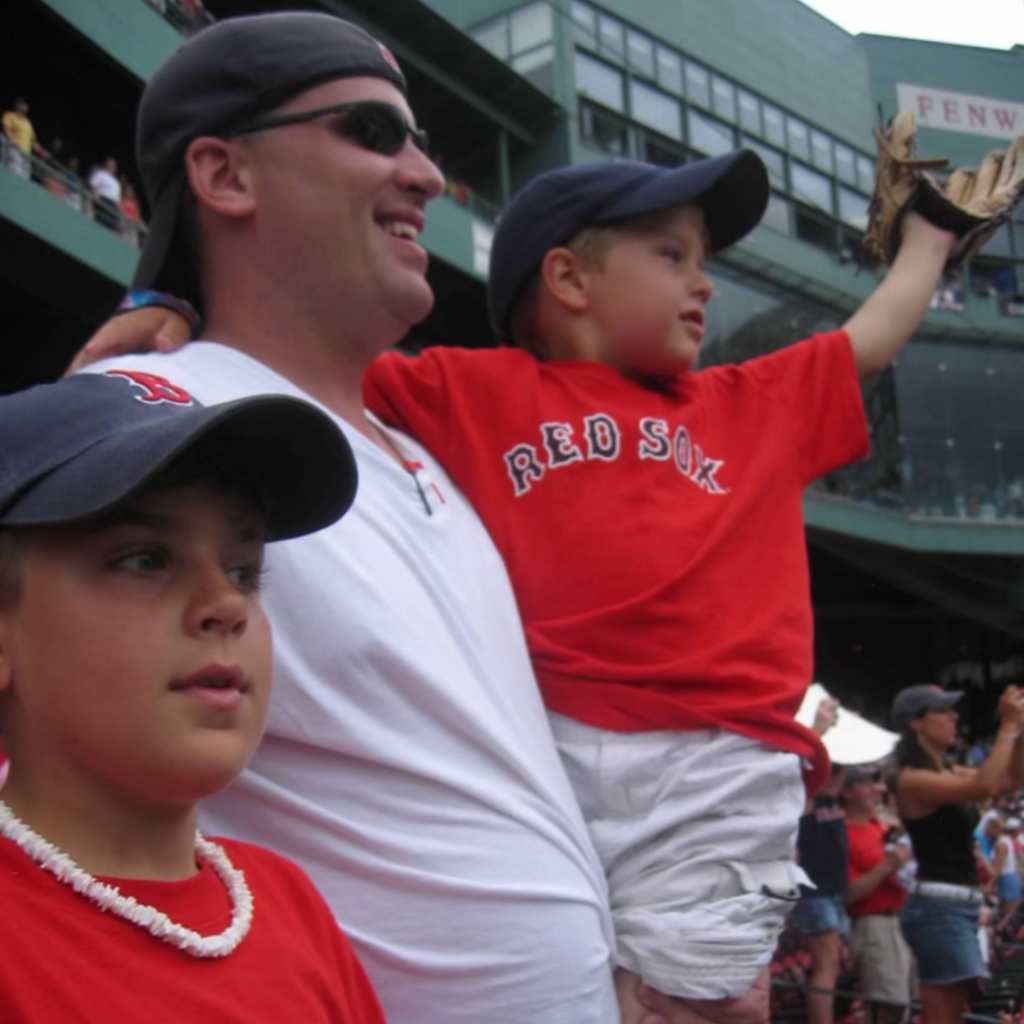
Kyle and much of the Aikman family, especially his uncle, have deep roots in Massachusetts and Boston. Growing up, Kyle regularly attended Red Sox games with his uncle and aunt, who had season home plate tickets, and his family’s deep New England roots instilled in him a lasting pride in the region.
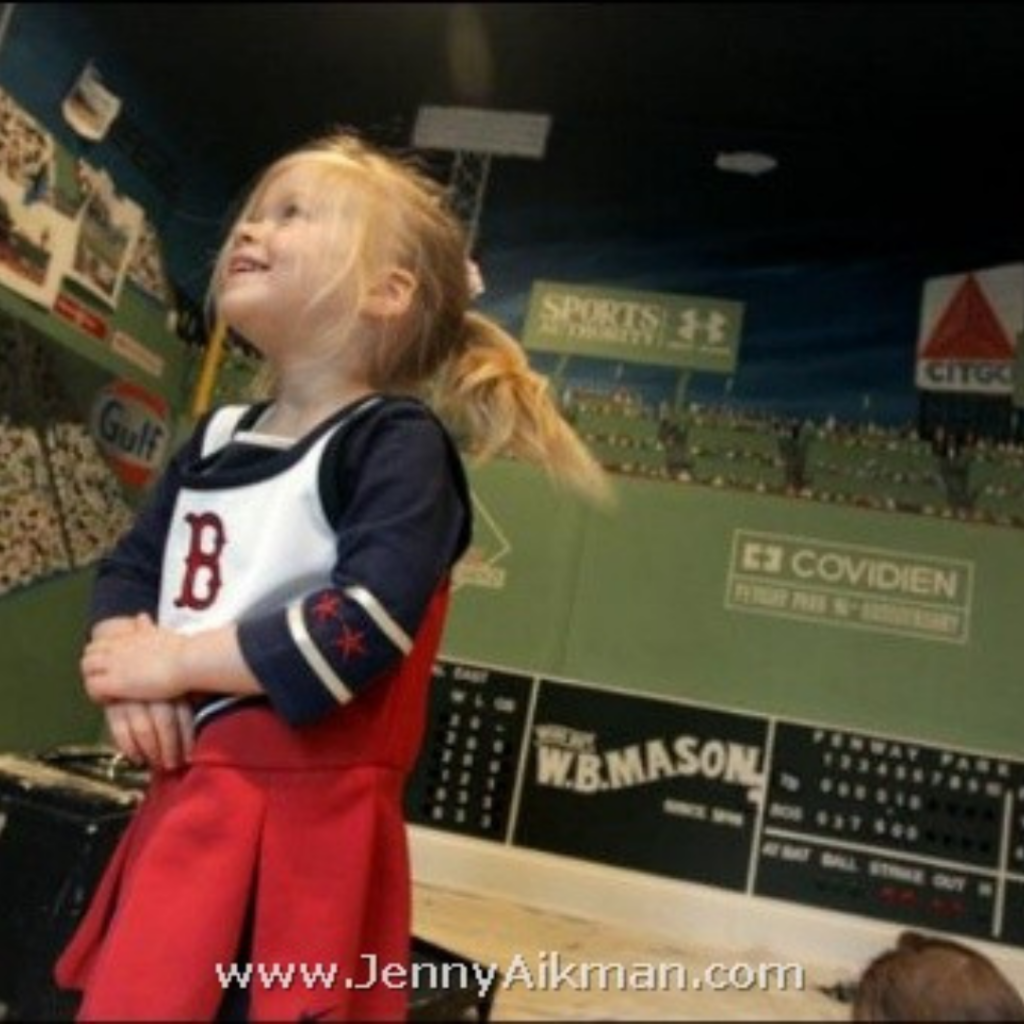
Uncle Dennis nurtured and reinforced that passion, from Bruins fandom to a hand-painted Fenway mural that filled an entire room of his house. “With most of my family being from Boston and going to these games growing up, it was always something that I would chat about with my uncle,” Kyle adds.
That connection extended beyond professional sports. Each year, the Aikmans held a family reunion where relatives gathered for the traditional Aikman family wiffle ball game, a beloved competition that brought everyone together across generations. “We just all gather around and play on this laughably small lawn, and grown men and adults are playing like kids. Someone broke their ankle sliding into third base a couple of years ago,” Kyle laughs. He remembers his uncle as the pitcher, setting the tone with both skill and playful heckling. Now, Kyle has taken over that spot on the mound, carrying on the role his uncle once held.
Dennis was also a devoted volleyball fan and coach. For Kyle, these connections to sportsmanship further cemented a lifelong bond to both the region and the culture of sports, family, and friendly rivalry that shaped it. “Sports and the city of Boston run deep in my family,” he adds.
That connection to Boston took on even deeper meaning during his uncle’s illness. Dennis received treatment at Massachusetts General Hospital, located just a short distance from the marathon’s finish line. Running toward that final stretch now carries added weight; it will feel like coming full circle, back to the place where his uncle fought so hard.
A Cause Shared
But it wasn’t just Boston that motivated him. Kyle’s reasons went beyond family traditions and his love for the city. Pancreatic cancer had long frustrated him, both for how deadly it is and how difficult it is to detect early. Having spent four years after college working in healthcare equity research, he was intimately familiar with the limits of cancer detection and treatment.
“I knew the healthcare system, the economics behind drug pipelines, even the emerging diagnostic tools,” he says, “but to still be met with the reality that we haven’t made much progress on this really deadly disease, it was frustrating. That’s why I wanted to do something with a pancreatic cancer charity: to play a small part in making a difference, to honor my uncle, and to help prevent this in the future for other families.” Linking together Boston, sports, and pancreatic cancer, the decision to run no longer felt ambitious. It felt inevitable.
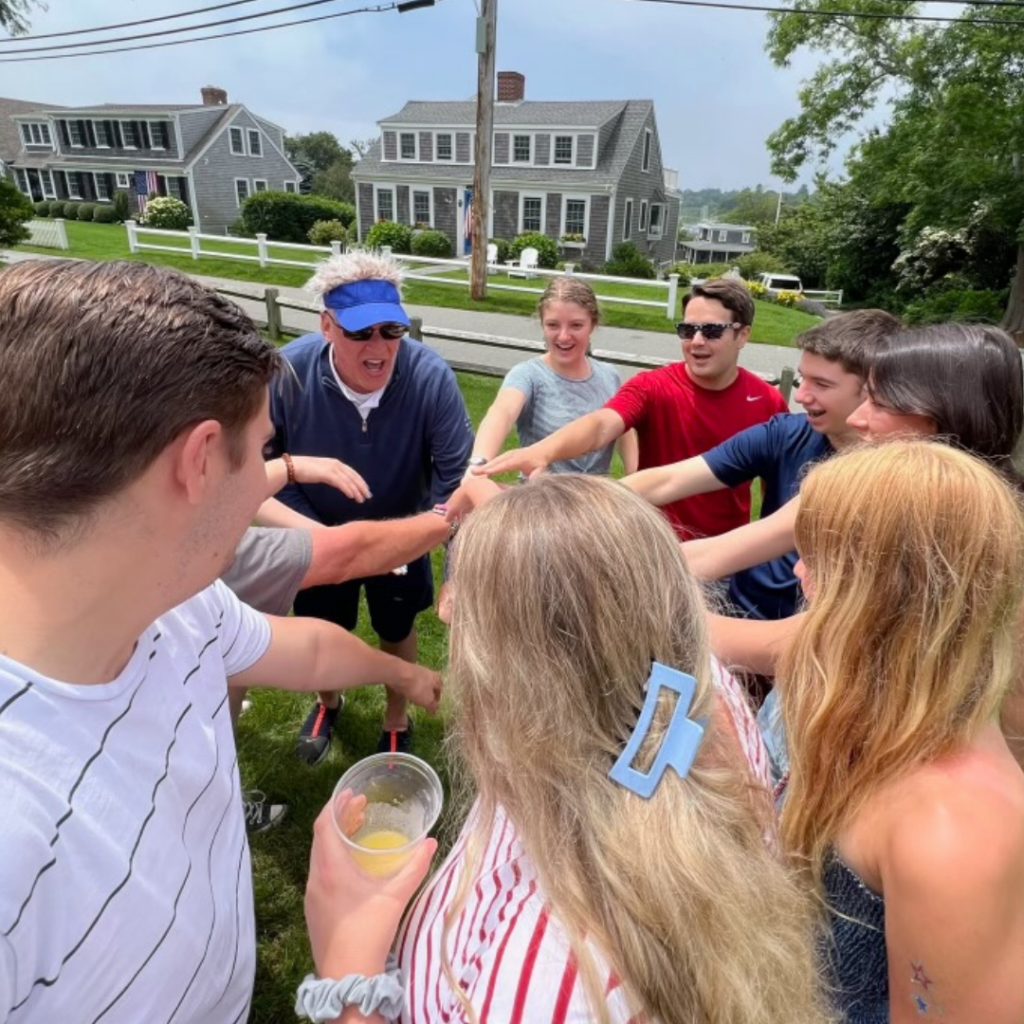
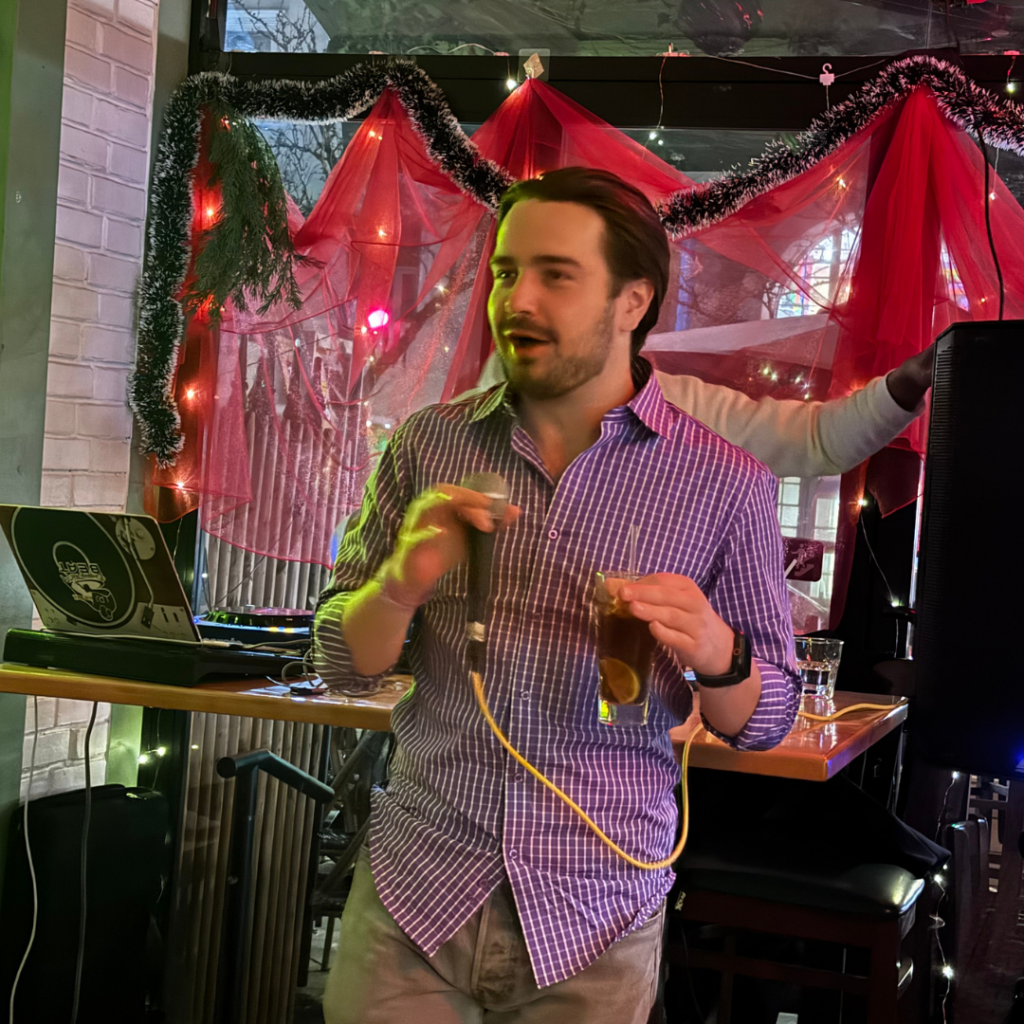
To involve others in the cause that meant so much to him, Kyle hosted a fundraiser at a bar in Manhattan’s East Village, inviting friends and family to support his marathon fundraising page. He invited everyone he knew in the city, holding the event specifically in honor of Uncle Dennis. What began as a simple idea quickly turned into a packed room of 50 to 60 friends and family members. While a few relatives traveled in from Long Island, most of the attendees were friends who had never met Uncle Dennis.
“One of the big reasons I wanted to do it,” Kyle explains, “was because I don’t think everyone fully understood where my uncle fell on the spectrum of closeness in my life.” Dennis and his wife had frequently taken Kyle and his brother off their parents’ hands when they were young. Before he passed, Dennis told Kyle that watching him and his brother grow up played a meaningful role in his own decision to have children.
Hosting the fundraiser and committing to the marathon became a way to publicly honor that impact. The bar agreed to donate one dollar for every rum and Coke sold that night, Dennis’s favorite drink. Nearly 50 were ordered. Kyle gave a speech about his uncle and about pancreatic cancer, and after hearing him speak, many guests increased their donations. More than anything, the night made clear to everyone why he was running and who he was running for.
It also taught him about the broader impact of sharing a personal cause. “You’d be shocked by the number of people who have also lost or been affected by the disease you’re running for, but you never knew it,” he reflects. One of his closest friends in New York, whom he has known for eight years, lost her mom at a young age, but he never knew she had passed from pancreatic cancer. And beyond raising awareness and building community, preparing for the marathon became deeply personal.
Carrying the Loss
Kyle faced a very difficult year after losing Uncle Dennis. Only two weeks after he lost his uncle, his grandfather also passed away. Running became his way to work through grief. He notes how, after major losses like these, you are faced with “all these firsts again”—the first birthday, the first Christmas, the first Thanksgiving, holidays, or a family graduation without your loved ones. Through these moments, Kyle explains, “you see your family transition and change with those losses,” and running allows him to process those changes.
For example, on his first birthday without Uncle Dennis, his run was deeply emotional, but necessary. And on the day his uncle passed, Kyle remembers that “Pink Skies” by Zach Bryan was released, a song about loss and how homes can feel empty when things change. As he ran that day, the sky turned a deep, vivid pink, and he felt an overwhelming sense of his uncle’s presence, as if he were right there alongside him.
On the tougher runs, when emotions are high and his body is struggling, he focuses on why he’s doing this. “I picture how I want to feel when I cross the finish line and see my family, and it’s going to be an emotional moment.” The experience has also made clear how important this is right now. “Especially after a loss, goals can feel undefined or even unimportant,” he says. “Being able to set one, work toward it, and see the payoff linked to the loss you suffered is a meaningful way to process grief. It lets you feel your emotions while creating a silver lining.”
Additionally, thinking about what his family must also feel is a motivator. “When you lose a big family figure like Uncle Dennis, you feel a vacuum, and you’re left wondering, what can I do about this?” Kyle admits. While there’s not much you can really do, running has given him a sense of agency. “Showing his immediate family just how significant he was in my life, and how that inspired me to do this, I think everyone understands how much it will mean to run in his honor, in a city that mattered so much to him and to our family.”
And in many ways, what he is doing is an extension of those Chatham summers, standing on a small lawn with a plastic bat in hand and watching his uncle wind up as the pitcher and set the tone for the game. Now, Kyle steps up to his own starting line, carrying forward that same energy, spirit, and sense of purpose. The marathon is bigger, the stakes higher, and the path longer, but the heart behind it remains the same: a mix of family, memory, and the determination to honor those who shaped him.
To support Kyle’s run in honor of Uncle Dennis and to help raise awareness for pancreatic cancer, donate to his fundraising page here.
If you’d like to run or participate in an event of your own for Project Purple, visit our events page.