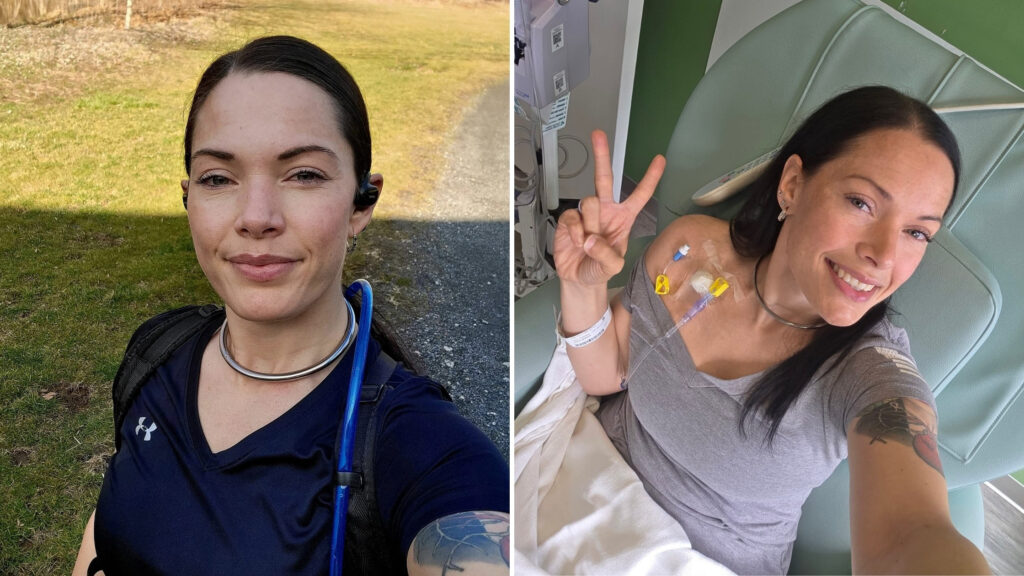
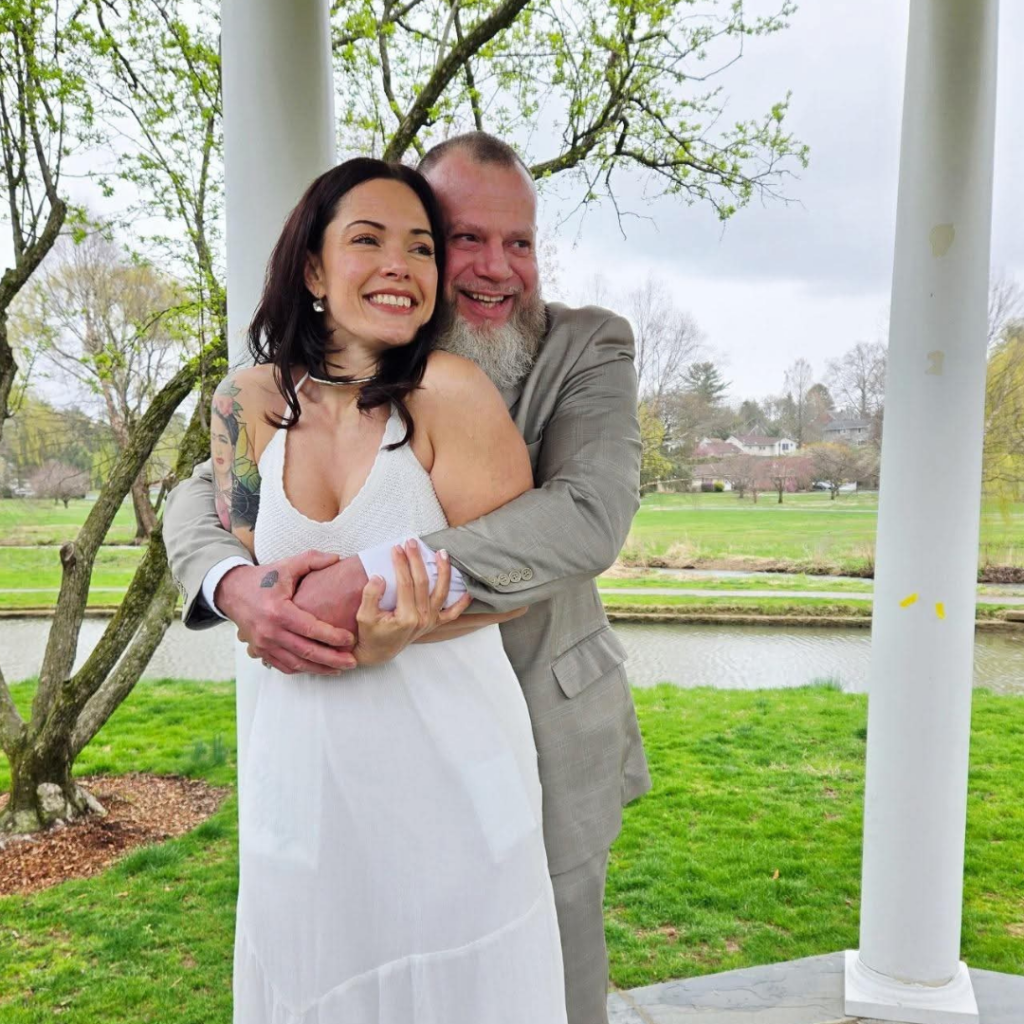
The last year of Becca Torres’ life in Pennsylvania has been a whirlwind: balancing a full-time nursing career, newly married life, and the ongoing work of rebuilding a dream home with her husband. Alongside it all, she has been navigating the demanding rhythm of a Stage 4 pancreatic cancer diagnosis she received in October 2025. And in the middle of a time where everything feels hectic, she has found something steady: running.
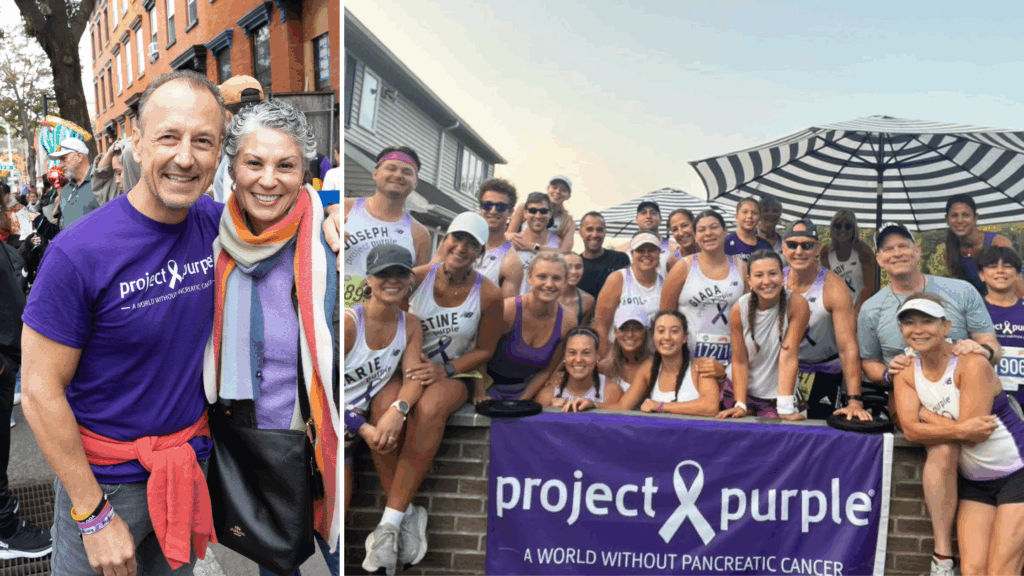
This July, Becca will take on the Boilermaker Road Race as part of the Project Purple Run Team, not despite her diagnosis, but in direct response to it. For her, every mile is both a challenge and a declaration that her story is still unfolding. Rather than stepping away from life, she has moved deeper into it: into treatment, into work, into community, and onto the road.
To support Becca’s run and to help raise funds for pancreatic cancer research and patient aid, donate to her fundraising page here.
A Life Interrupted
Becca Torres was in a season of momentum when everything changed. After meeting her husband in her late twenties through mutual friends, she eventually relocated to Pennsylvania from New Jersey, where she pursued nursing school and began building her career in healthcare.
Now five years into nursing, Becca works in med-surg after beginning her clinical journey in spinal cord rehabilitation. She and her husband recently got married, took a honeymoon, and bought a fixer-upper home they are actively renovating together.
“It felt like everything was finally coming together,” she recalls. “I had worked so hard for so many years, and I was finally in a place where I could see the results of all of it.” That sense of stability didn’t last long, though.
In October of last year, Becca began experiencing what seemed at first like mild digestive discomfort: something easy to dismiss in the middle of a busy life. But the symptoms persisted, subtly at first, then more consistently. At first, she assumed it was stress, exercise strain, or something as routine as heartburn, but the symptoms continued and slowly became harder to overlook.
A routine visit to establish care with a new primary care provider led to an ultrasound. That appointment would change everything. Within hours, before she even had a chance to speak with her doctor, Becca saw the radiology report in her patient portal. The language was immediate and alarming: “likely metastatic disease,” “innumerable lesions,” and a “concerning mass.”
From there, everything moved quickly: CT scans, oncology consultations, blood work, and a biopsy followed in rapid succession. On October 31st, she received confirmation: adenocarcinoma, later identified through further testing as Stage 4 pancreatic cancer located in the tail of her pancreas.
Becca immediately turned to Google, searching for answers, and was confronted with devastating information and statistics. “I had gone from thinking I pulled a muscle or gave myself a mild hernia to being told this was likely incurable in a matter of days,” she shares. “I would have a hard time even getting out of bed because I was paralyzed with fear.”
Before this, Becca had considered herself extremely healthy, even joking with her husband that she would live forever. That sense of certainty disappeared almost overnight. She found herself constantly asking: How long do I have to live?
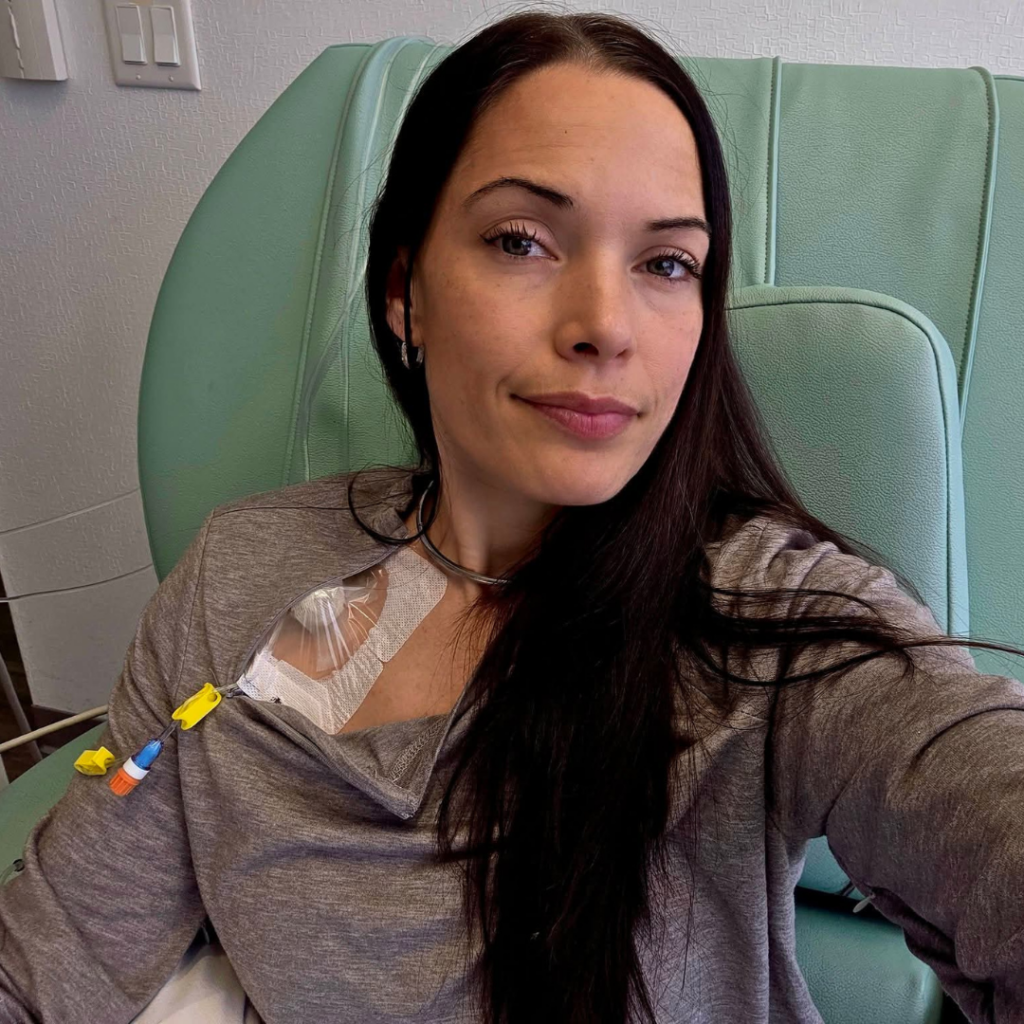
Doctors were direct. Surgery was not an option, and chemotherapy would be the primary treatment path, focused on extending life rather than curing the disease. For someone who had spent her life in healthcare, and who had just entered what felt like a stable, forward-moving chapter, that information landed with force. But even in those early days, something began to shift.
Beyond the Statistics
A turning point came right after her diagnosis, when Becca’s husband handed her a book: The Art of War. “He just looked at me and said, ‘You need to learn your enemy,’” she recalls. From there, she began actively seeking out more information—not clinical statistics, but lived experiences.
She turned to online pancreatic cancer communities, where she encountered stories that complicated everything she had initially been told. Some patients were living far beyond expected timelines. Others were responding well to treatment. A few had no evidence of disease. That search eventually led her to the Project Purple Podcast.
The first episode she listened to was a game-changer. Hearing someone with the same diagnosis who was still living and thriving shifted something for her. It disrupted the constant sense of fear and made space for possibility. From there, she kept listening, and those episodes also introduced her to a word that she took to heart: superhuman. “I began to believe that if those amazing outcomes were possible for others, they would be equally as possible for me,” she says.
And as a nurse, that shift was also grounded in how she understood behavior and outcomes. She notes how there are things about physiology you can’t change, like her cancer, but she emphasizes how powerful mindsets are. “When people believe they’re going to have a certain outcome, they almost seal their own fate and cut themselves off from other possibilities. But when people have that fight and fire in them, it doesn’t guarantee a specific outcome, but it opens up other possibilities,” she shares. And that’s what she committed herself to.
That sense of possibility continued to grow, especially through community. But it also created tension at times in her medical experience. While she values her care, she describes moments where the bluntness of clinical conversations made her feel like hope and realism were in conflict. “I would go to appointments feeling really good about how I was doing,” she says. “And then I’d leave after having conversations that made me question whether my hope was unrealistic.”
But each time she returned to the Project Purple Podcast or online communities, it was a different story. “I’d get filled back up again with hope,” she says. “And I’d remember that it’s not my only possibility.”
Movement as Medicine
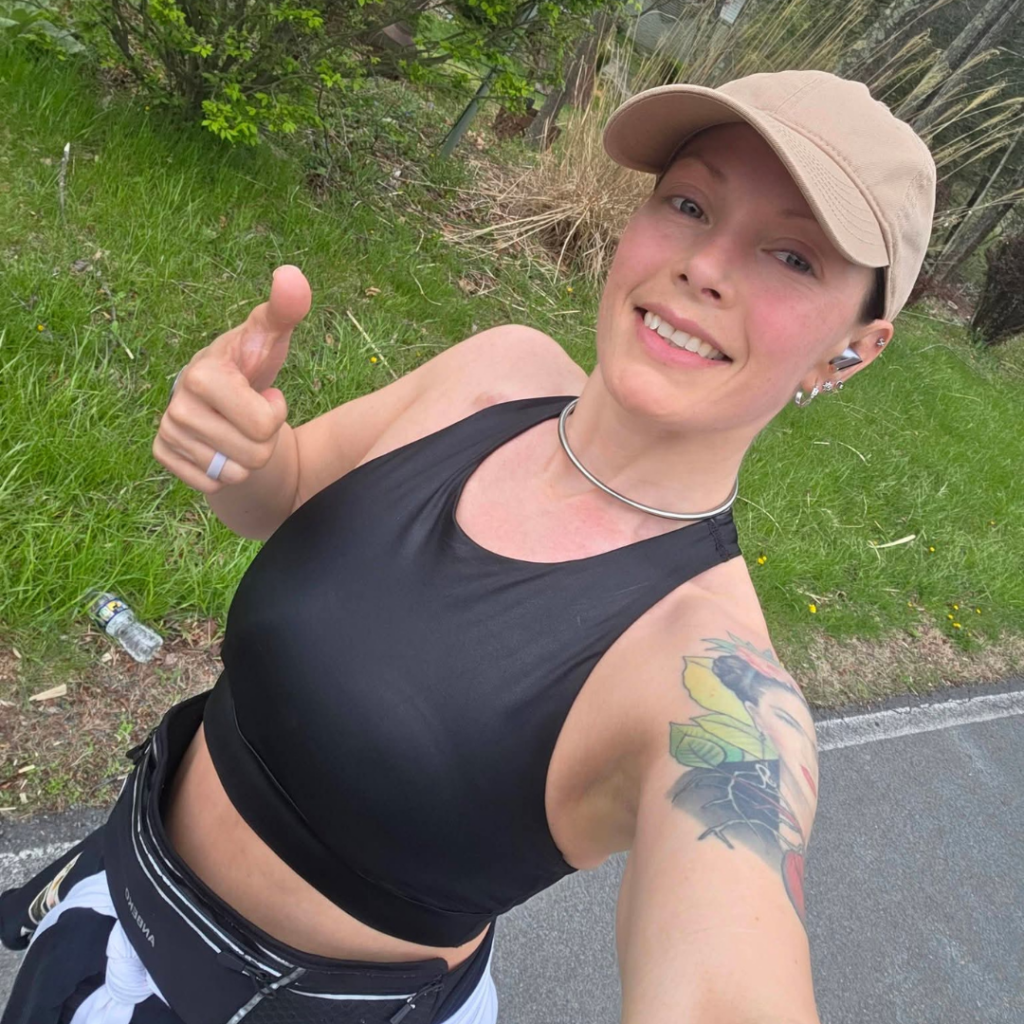
With this renewed sense of hope and possibility, Becca returned to work after a month off following her diagnosis and is now back in the rhythm of her nursing career. Getting back into her normal groove was essential. “I don’t want this disease to run my life. I want to maintain my normalcy,” she says.
Alongside work and treatment, as she is on a chemotherapy regimen, she has also returned to something that had long been part of her life before diagnosis: running. Running was not always part of Becca’s identity; she began in her late twenties after quitting smoking, initially as a way to commit to staying healthy.
She started with the Couch to 5K program, where even short intervals felt difficult at first. “I thought I was going to throw up after 90 seconds of running,” she laughs. “But I kept going. It made me feel so strong inside.” And over time, running became something else entirely; not just physical, but emotional and grounding, especially after her diagnosis.
This time, it wasn’t about weight or routine. It became a way for her to feel grounded in her body and mind. “After that initial period of depression and fear, I started to feel empowered again, and I made it a point to dive back into that practice as a way to prove to myself that I can do it,” Becca says.
And though she ran inconsistently over the years, mixing in yoga, weightlifting, and periods of higher mileage, she never formally raced. But through the Project Purple Podcast, she began hearing others talk about running and the support of run teams. “I remember thinking to myself, ‘Well, I love to run, and here I am receiving so much hope and being so impacted by this podcast, but just listening from the shadows, like a spectator. Why don’t I get involved?’”
Eventually, that thought shifted into action. She began looking for a race she could realistically join with Project Purple, something within driving distance and compatible with her treatment schedule. And she found it: the Boilermaker Road Race, a 15K in Utica, New York.
Even before finding that race, Becca had already set a goal for herself: she wanted to run a half marathon. While the Boilermaker isn’t quite that distance, it came close enough to feel like a meaningful step toward it. During one of her pre-treatment appointments, she shared that goal with her physician assistant. “I told her, ‘I’m feeling really good, a lot better than when I started. I’m exercising again, I’m running, and I think I want to run a half marathon.’”
Her PA reacted with surprise. “She kind of widened her eyes and said, ‘You might want to wait and see how you’re feeling in February,’” Becca recalls. The comment stayed with her, but not as a deterrent. Rather, it clarified something for her. “It made me realize she maybe didn’t expect me to be doing this well,” she says. “But I just needed to prove to myself that I can do this. That I can do something amazing, and that this disease does not have to define my possibilities.”
So, on July 12th, after finishing a round of chemo, Becca will line up at the start line not only to show others what she is capable of, but to remind herself that she is far more than her diagnosis and anyone’s perception of what she can do.
Training Through Uncertainty
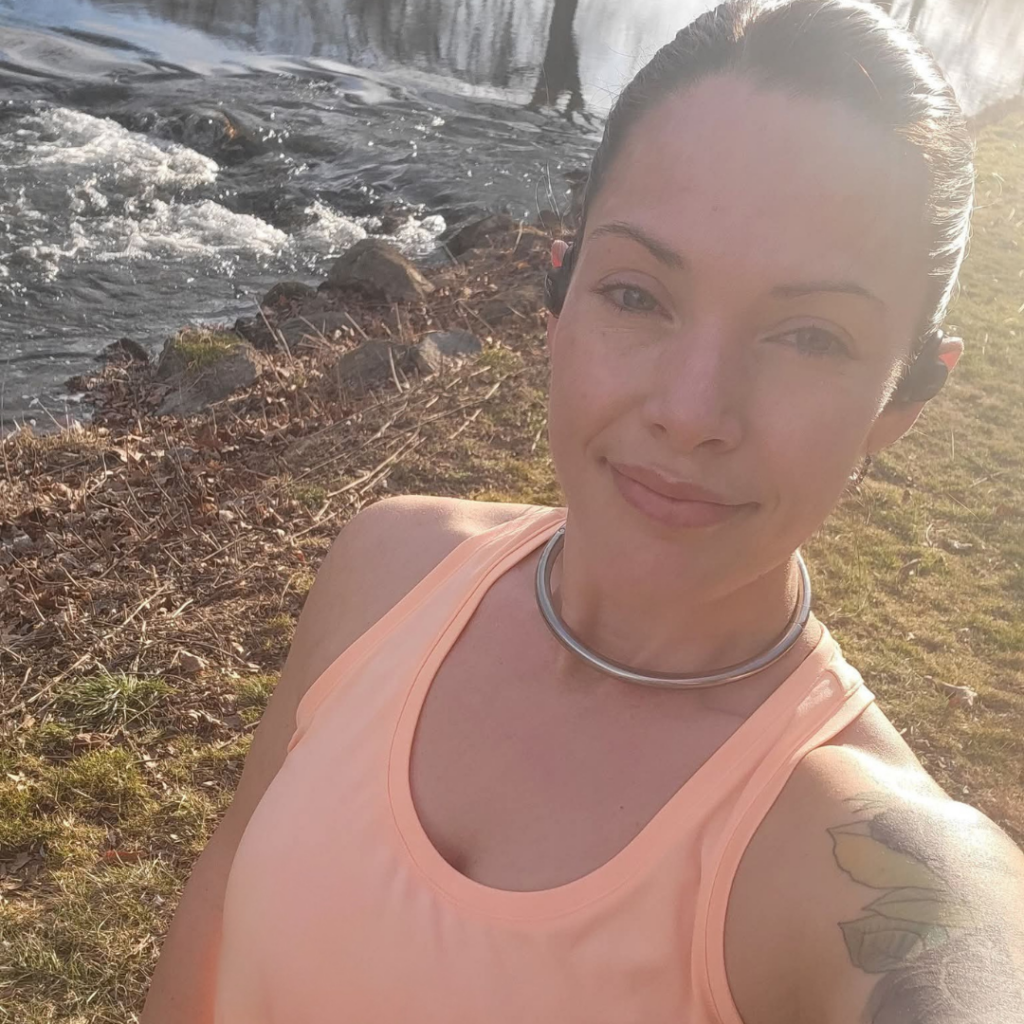
Preparing for the Boilermaker Road Race has looked different for Becca than it does for most runners. There is no rigid training plan or perfectly mapped schedule. She is currently undergoing chemotherapy, and that reality shapes every aspect of her training. As a result, she has leaned on structure where she can, and flexibility where she needs it.
On some treatment weeks, running simply isn’t possible. On others, she finds moments where she can get out and move, even running miles while still attached to her chemo pump. This process has shown Becca that training is not about perfection or consistency in the traditional sense, but about adaptation, patience, and learning to accept what her body can do on any given day.
“I put a lot of pressure on myself to do things, and I get frustrated during my treatment weeks when I can’t be as productive or as active as I’d like to be,” she admits. “So I’m learning to give myself a lot of grace.” Even so, she continues to build forward momentum wherever possible. She schedules her longer runs on her off-treatment weeks, when her energy is more stable, using those days as anchors in her training. Slowly but surely, she continues to add more miles.
Being part of a run team for the first time has added another layer of meaning to that progress. Training is no longer just something she is doing for herself; it is something she is doing within a community that understands the weight behind every mile. For Becca, that sense of community extends far beyond race day logistics; it has also become deeply personal and, in many ways, spiritual.
Throughout her diagnosis and treatment, Becca has leaned into prayer, meditation, and reflection as part of her daily routine. “I ask for my higher power’s guidance,” she explains. “And I also ask for healing for my body.” Over time, that practice has evolved into something more intentional: a way of reframing how she sees her life and her illness.
“I believe I was granted a beautiful gift of being a steward of this body in this lifetime,” she says. “My intention with this body is to live a long, beautiful, healthy, happy, joyful, adventurous, creative life with my husband, my family, my friends, and my community… all with purpose.”
For Becca, that word carries weight. Purpose is not abstract; it is something she actively tries to live into, especially in the midst of adversity. Running, in this sense, becomes a way of aligning her actions with that intention: of choosing to move forward even when things are uncertain.
Purpose in the Process
That sense of purpose has also extended into the pancreatic cancer community around her. “Being able to do something that’s not only for me, but can impact others through fundraising, research, and supporting patients and families going through treatment—that gives me a purpose,” Becca adds. She has been paying attention to ongoing research, clinical trials, and evolving treatment approaches, and feels hopeful about what her fundraising can help make possible.
Just as importantly, she has found meaning in the collective experience of community itself. “There’s so much power in being part of something bigger than yourself,” she explains. “Being involved with people who are going through this, who have gone through it, or who are supporting someone with this disease; it matters. Just showing up, even when it’s hard, and doing that together.”
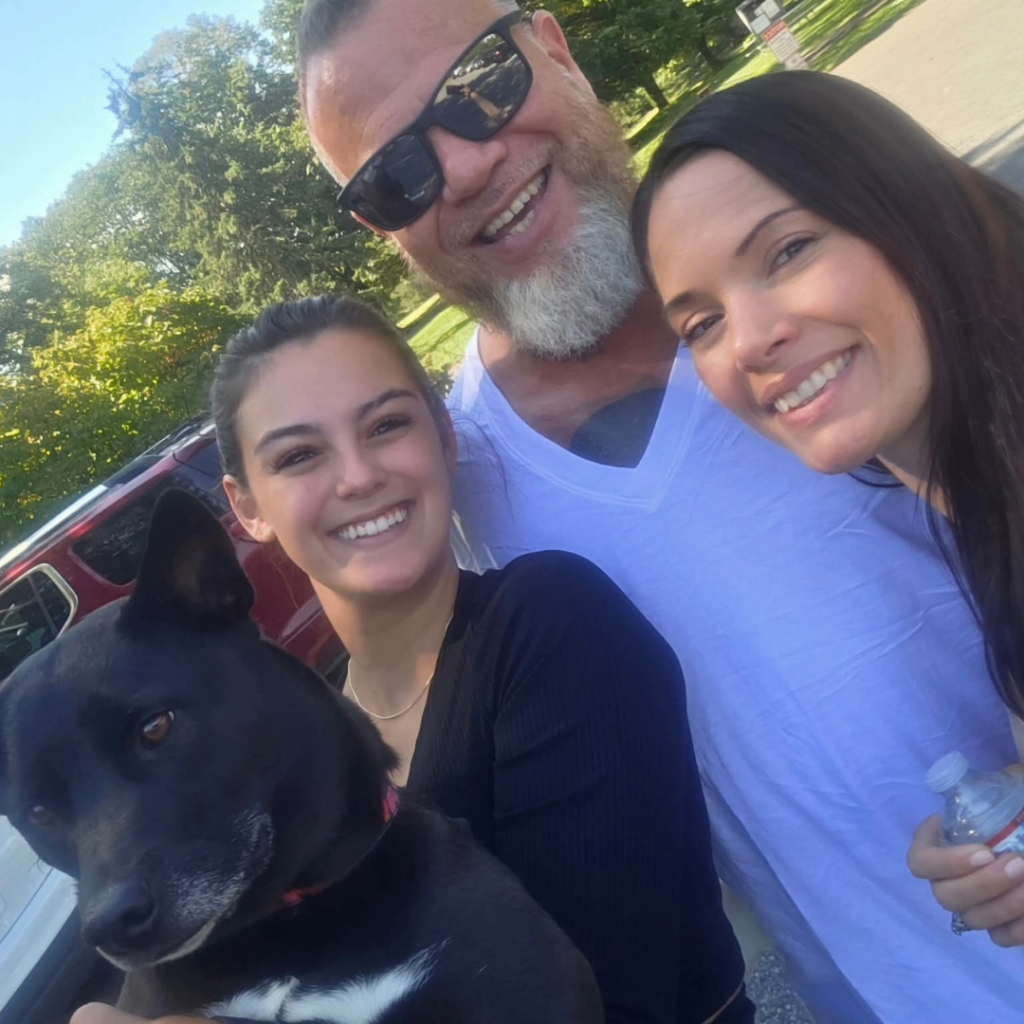
In the middle of a year defined by treatment, work, and rebuilding her life, Becca has leaned heavily on that support system. “My husband is my rock. I can’t imagine walking through this without him,” she says. Beyond that, she describes a wide circle of support: family members who check in constantly, in-laws, cousins, friends, and even people she never expected to step in so fully.
That support has also shown up in tangible ways. In the middle of a major home renovation project, one she and her husband began together before her diagnosis, friends have stepped in to help complete the physically demanding work she can no longer always take on.
That model, she explains, is rooted in leaning on others. “When you’re going through something like this, you find hope in each other,” she says. “I’ve learned to seek out people who have experience, people who have solutions, and to learn from them.”
So when race day comes, Becca knows it will be emotional and challenging, but also deeply fulfilling. She describes the feeling she gets after pushing through a long run as one of the most powerful experiences she knows—“like you’re on top of the world.” As she imagines crossing the finish line, that sense of accomplishment is inseparable from the people who have supported her, and from the larger purpose she now feels in running.
Looking ahead, she reflects on what she would say to others facing similar battles, and even to her pre-diagnosis self: the importance of perspective, gratitude for what is around you, and the reminder that you are a statistic of one. “If I can even give a fraction back to anyone else in the world, I’d be honored to do that,” she says.
She knows this running journey will keep going, with a full marathon as a long-term goal she is working toward. And when she reflects on what running has come to mean to her, Becca says, “Running is a spiritual practice. Every breath I take, every time my foot hits the pavement, it’s just a testament to the fact that I’m still alive. I still have fight, and there is still hope for me.”
To support Becca’s run and to help raise awareness for pancreatic cancer, donate to her fundraising page here.
If you’d like to run or participate in an event of your own for Project Purple, visit our events page.