CINCINNATI — Scientists at the University of Cincinnati have received $375,000 through Project Purple’s Research Recovery Grant to continue critical pancreatic cancer research that faced unexpected funding disruptions.
The two-year grant supports the university’s research study, which had experienced a reduction in federal funding. By providing recovery funding, Project Purple ensures this promising research can proceed without interruption.
The University of Cincinnati is one of several institutions receiving support through this initiative, along with Georgetown University and Weill Cornell Medicine.
“Our goal is to keep the science moving. In the current environment where grants were cut by the federal government, which funds 80% of cancer research within the U.S., these grants support projects that were defunded,” says Dino Verreli, CEO and founder of Project Purple. “One of our biggest goals is to have the greatest impact with every program, and we feel this is the way we can have the greatest impact with our research program in order to keep making progress.”
University of Cincinnati Study Seeks New Approaches to Treat Pancreatic Cancer
Under the guidance of Andrew M. Waters, PhD, researchers at the University of Cincinnati are working to tackle some of the biggest challenges in pancreatic cancer treatment. Most tumors are driven by mutations in a gene called KRAS, an “on switch” that tells cancer cells to grow uncontrollably. KRAS, until recently, has been considered “undruggable.” The Waters Lab was recently part of a large academic/industry collaboration describing a new class of KRAS inhibitors, the clinical analog of which is more than doubling overall survival in pancreatic cancer clinical trials. These compounds have the potential to be practice-changing and paradigm-shifting for patients with pancreatic cancer. Despite the early promise, most patients ultimately relapse due to treatment-induced resistance mechanisms. With support from Project Purple, the team is investigating how pancreatic tumors resist drugs, a “brick wall” in cancer treatment, by studying the mechanisms that allow tumors to survive and adapt in ways that differ from patient to patient.
Current therapies and first-in-class KRAS inhibitors rarely lead to a complete response because the tumor adapts too quickly, making long-term treatment difficult. The researchers aim to identify these resistance mechanisms and develop new strategies that could make KRAS inhibitors more effective and longer-lasting.
Pancreatic ductal adenocarcinoma (PDAC) is one of the deadliest forms of the disease, with only about 13% of patients surviving five years. The University of Cincinnati research team is exploring why some tumors are naturally resistant and how those that initially respond eventually adapt under treatment. Their work focuses on key “backup generators” – specific biological glitches and rewiring that help the cancer survive. These include a particularly aggressive KRAS mutation and a protein called MRAS that helps tumor cells adapt to drive drug resistance.
To study these mechanisms, the team is taking a two-pronged approach to map exactly how cancer cells evade therapy. They have developed a series of laboratory models, including 12 unique KRAS inhibitor “resistant” cell lines, to observe how pancreatic cancer cells rewire themselves when exposed to drugs and to identify the biological pathways that allow the cancer to survive.
The first aim of the project is to better understand why certain KRAS mutations, such as KRAS Q61H, are naturally more aggressive and resistant to treatment. Researchers believe this mutation “tricks” other healthy proteins in the cell into being overly active, allowing the cancer to continue growing even when the main KRAS protein is blocked.
At the same time, the team is investigating MRAS, a protein normally found in muscle and brain tissue, which appears in pancreatic cancer cells under drug treatment. MRAS helps tumors change shape and identity, a process called epithelial-to-mesenchymal transition, making the cancer cells harder to kill.
Using advanced laboratory techniques, including CRISPR-Cas9 gene editing and RNA sequencing, the University of Cincinnati team is mapping how pancreatic cancer cells evade therapy. Their ultimate goal is to move beyond a “one-size-fits-all” approach and develop combination treatments: drug “cocktails” that target both the main KRAS driver and the tumor’s backup survival mechanisms. By identifying the specific proteins that help cancer cells survive, this research is guiding the creation of therapies tailored to the unique resistance mechanisms of each tumor.
This work represents a shift from traditional trial-and-error approaches to precision oncology, and instead represents a bench-to-bedside-to-bench approach. By understanding how different KRAS mutations respond to treatment and uncovering the pathways tumors use to resist drugs, the team aims to improve patient outcomes and provide high-quality data that can benefit the broader scientific community.
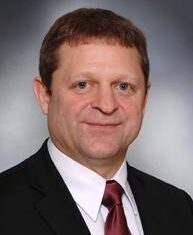
Andrew M. Waters, PhD
Leading this study is Dr. Waters, who has served as an Assistant Professor in the Department of Cancer Biology at the University of Cincinnati College of Medicine since 2022. He is a recognized expert in the study of RAS-driven malignancies, bringing advanced molecular insight to the development of next-generation treatments for pancreatic cancer.
Dr. Waters leads a laboratory dedicated to unraveling the complexities of RAS signaling and its role in tumor progression and therapeutic evasion. His research integrates biochemical, proteomic, and genetic strategies to identify vulnerabilities within the KRAS pathway, particularly in pancreatic ductal adenocarcinoma (PDAC). Dr. Waters has made significant contributions to understanding how oncogenic signaling networks can be targeted to overcome resistance and improve patient outcomes.
Project Purple Sustains Critical Pancreatic Cancer Research
Founded in 2010, Project Purple is dedicated to creating a world without pancreatic cancer while improving care and outcomes for patients and families. The organization has funded more than $5.5 million in pancreatic cancer research, supporting projects that span early detection, curative treatment, technological advancements, and innovative therapeutic strategies.
The $375,000 Research Recovery Grant awarded to the University of Cincinnati is part of a special initiative designed to support the careers of early-stage investigators (ESIs), helping emerging scientists maintain momentum and establish independent research programs during the critical early years of their careers.
With guidance from its Multi-Disciplinary Research Committee, Project Purple identifies and funds innovative research initiatives that have the potential to advance the understanding, detection, and treatment of pancreatic cancer. The organization is proud to support the University of Cincinnati’s research, ensuring this promising work continues and contributes to the development of more effective treatments for patients.
“Every grant we award represents hope for researchers, patients, and families affected by pancreatic cancer,” said Dino Verreli, CEO and founder of Project Purple. “We’re proud to help ensure these projects continue to move the field forward and bring us closer to better treatments and, ultimately, a cure.”
In addition to research, Project Purple has awarded more than $1.5 million in patient aid, allowing over 1,500 patients & families to focus on treatment and care rather than financial stress.
To learn more about Project Purple, visit projectpurple.org/about.
For media inquiries, contact info@projectpurple.org.