From the familiar roads of North Carolina to the streets of D.C. and London, Kristen Zimmer has come to understand that running is no longer just about distance or pace. It has become a way to carry memory, to move through grief, and to stay connected to the person who shaped so much of who she is. That understanding carried her through both the Marine Corps Marathon in 2025 and the London Marathon in 2026 with Project Purple, where each mile became part of something far larger than the race itself.
That connection was formed in 2023, when her mother, Tia DeMaria, was diagnosed with pancreatic cancer and passed away less than two weeks later. The speed of her loss left Kristen with little time to process what had happened, but in the years that followed, running became something steadier to hold onto: a rhythm that made space for memory and forward motion at the same time, as her mother’s presence lingered quietly in every step she took.
First Miles of a Longer Journey
Kristen Zimmer grew up between two places that shaped her identity: the Washington, D.C. area, where she was born, and North Carolina, where her family moved in 2001. It was there, in North Carolina, that she spent most of her childhood and adolescence exploring movement in many different forms.
Sports were always part of her life. She swam, played basketball, and eventually found herself immersed in competitive Irish dance alongside her sister. For years, dance gave her structure, discipline, and community. But as she entered high school, she began to feel drawn toward something new: something that would push her in a different way.
That shift came unexpectedly when she decided to try cross country. The first practice was, by her own description, brutal. She remembered being dehydrated, overwhelmed, and completely unfamiliar with how to fuel or prepare for endurance running. But beneath the discomfort was something she couldn’t ignore: she liked it. The challenge stayed with her.
She returned again and again, and that decision quietly marked the beginning of a new identity. Still, running remained secondary for a while. It wasn’t until the COVID-19 pandemic that it became central. With normal routines disrupted, Kristen turned to the outdoors for structure and mental clarity. She decided to train for her first half marathon, using the distance as both a goal and an anchor during an uncertain time.
That race was not a traditional event. It took place on loops around her neighborhood, about 15 laps in total, surrounded by family and friends who created a makeshift paper finish line. It wasn’t about competition; it was about completion, and about proving to herself that she could keep going even in isolation.
From there, running became part of her life in a more serious and steady way. As things began to feel more normal again, she joined a local running group, found community in it, and started training for additional half marathons. She ran races with friends for fun, learning the joys of “party pacing” and group runs. At the time, she didn’t yet realize how much she would eventually come to rely on it.
The Moment Everything Changed
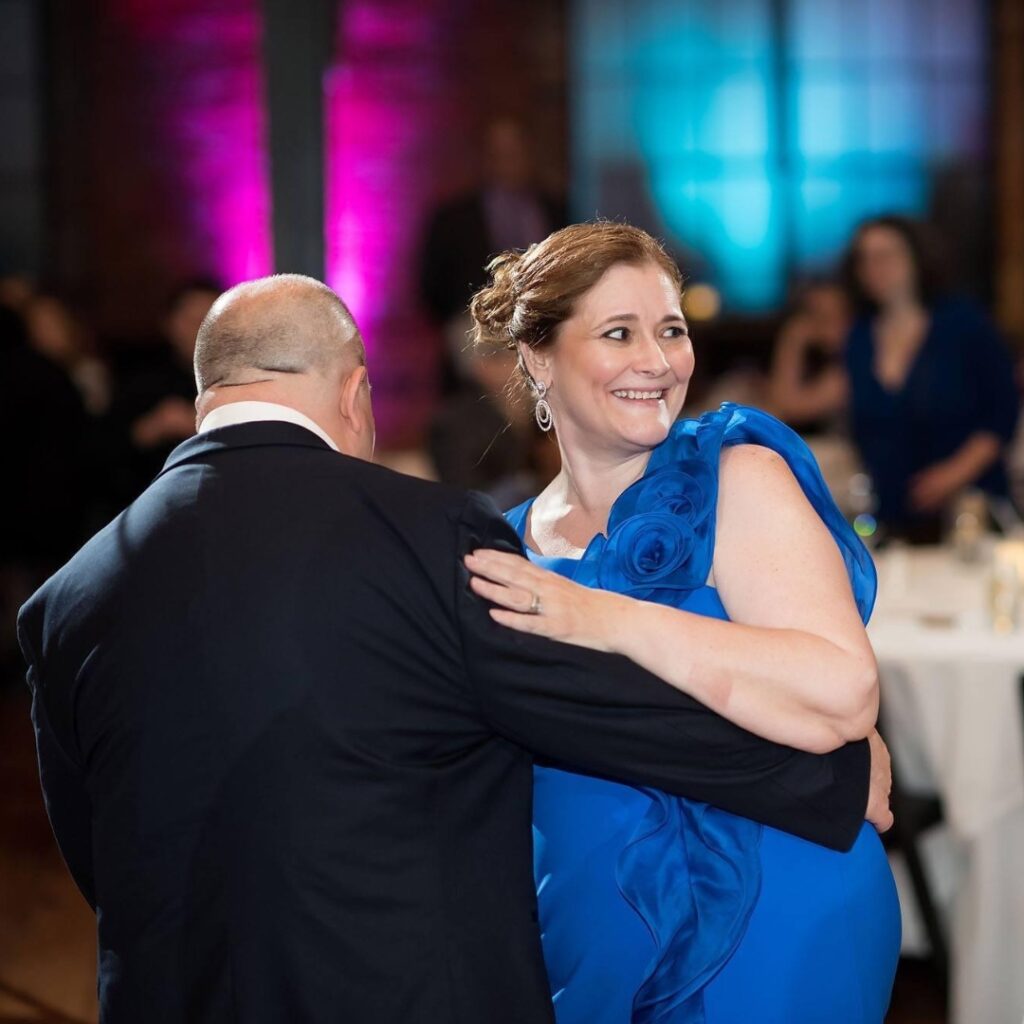
Everything shifted when her mother became sick. Kristen’s mother, Theodora, known affectionately as Tia, had always been a central force in her life: deeply caring, fiercely supportive, and known for her ability to take care of everyone around her. As Kristen puts it, “No one cared, I think, as deeply about other people as my mom. She would do anything and everything for those around her, whether you’re her daughter, whether you’re her parent, whether you’re her spouse, or just a random person that she hardly knows.”
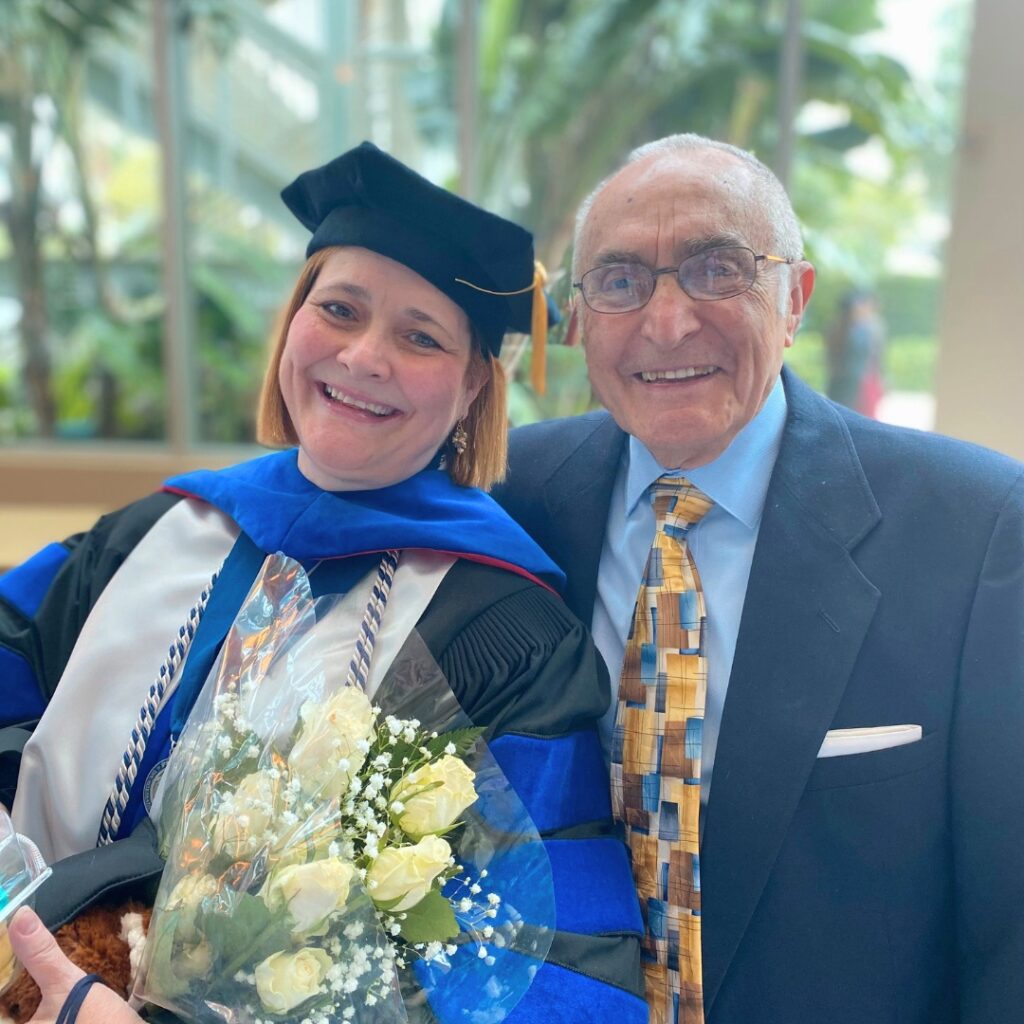
That sense of care extended into every part of her life, including her academic and professional pursuits. In 2022, just a year before her passing, Tia earned her PhD in industrial-organizational psychology while working full-time: a degree that reflected who she was at her core. It was an achievement Kristen still speaks about with pride, noting how her mother had talked for years about wanting to do it. “She was one of the strongest women that I have ever met,” she says. “She was a force to be reckoned with. If she wanted to accomplish something, she absolutely would.”
But in early 2023, everything changed quickly. Tia had traveled with family to celebrate her father’s 90th birthday: an occasion she took great joy in planning, especially given how much she loved bringing her extended Italian family together. On the trip, she began feeling unwell, experiencing some pain that at first didn’t seem out of the ordinary. But on the drive back to North Carolina, her condition worsened rapidly. She lost her appetite, became increasingly fatigued, and eventually went to Duke University Hospital, where she was admitted.
Within days, the diagnosis came: Stage Four pancreatic cancer. What followed was devastating in its speed. Kristen described a rapid decline that unfolded in less than two weeks, from hospital admission to her mother’s passing. Despite medical intervention and procedures intended to stabilize her condition, Tia’s health deteriorated quickly. She was transferred to hospice care, where she passed less than 24 hours later.
The timeline was almost impossible to process. “It’s still unreal to me how quickly and severely things moved,” Kristen shares. “We didn’t know what was going on.” It wasn’t just the shock of how quickly it happened, but the way life was suddenly divided into before and after.
When It All Became Something More
In the aftermath of her mother’s passing, running changed. It stopped being a hobby or even a goal. It became a place where grief could exist without completely overwhelming her. When she ran, she wasn’t avoiding her mother’s memory: she was moving through it.
“I found that when I was running, it was an escape from a really, really dark reality of the time,” she says. Kristen adds that it gave her something steady to hold onto: “It helped me through my grief journey by providing something to focus on, some stability, and a goal to look forward to.”
As everything surrounding her mother’s passing unfolded, she decided to shift her focus toward something she had never done before: her first full marathon. “I thought that doing something I had never done before would give me something even more to focus on,” she says. “Something to continue occupying that space in my brain, giving me that mental stability that I needed.” The 2023 Richmond Marathon would become that goal.
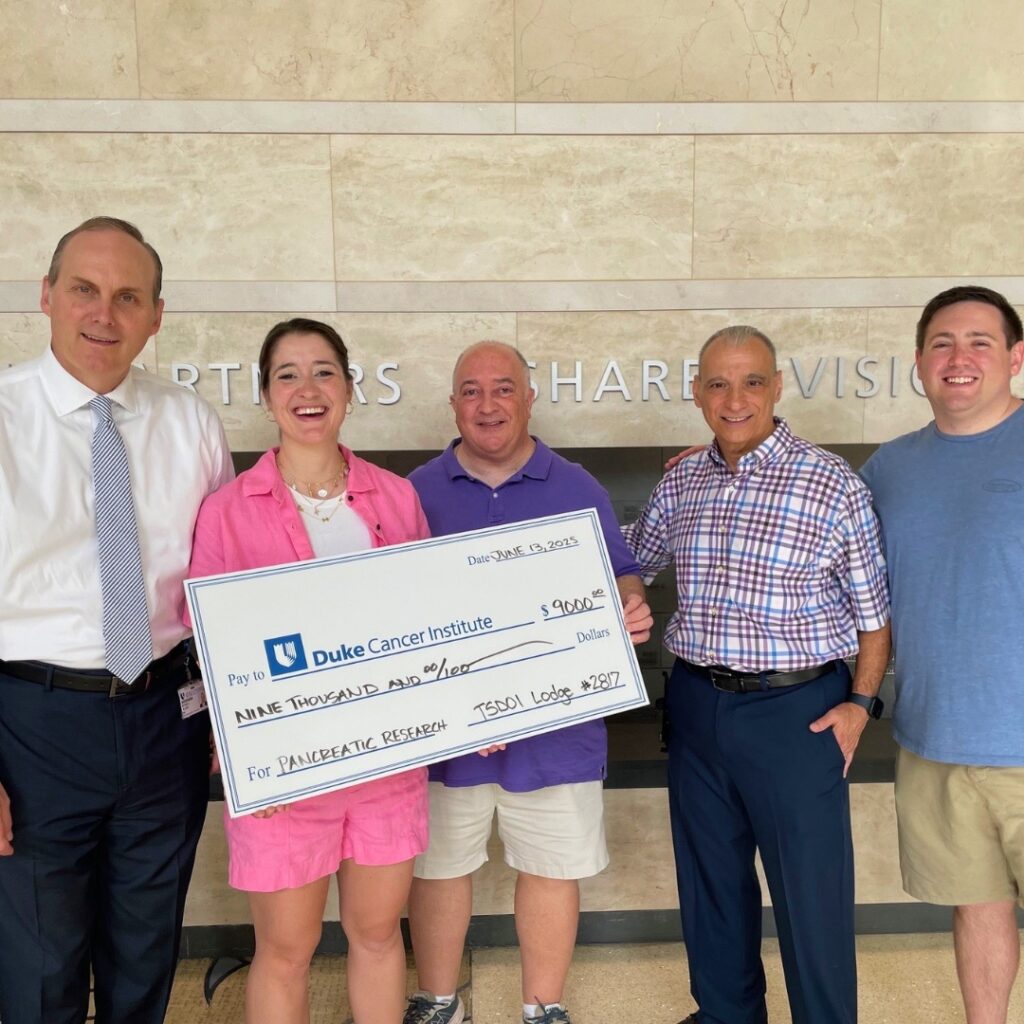
Now, running has become fully about the emotional meaning behind it. She dedicated this first full marathon to Duke Cancer Institute, where her mother had been treated, as a way of giving back to the place that was part of her family’s final days with Tia. And with that deeper emotional connection to running and purpose, Kristen found herself increasingly drawn into the pancreatic cancer space in a more active way, beginning with a local tradition that would grow into something much larger: a bocce tournament held in her mother’s memory.
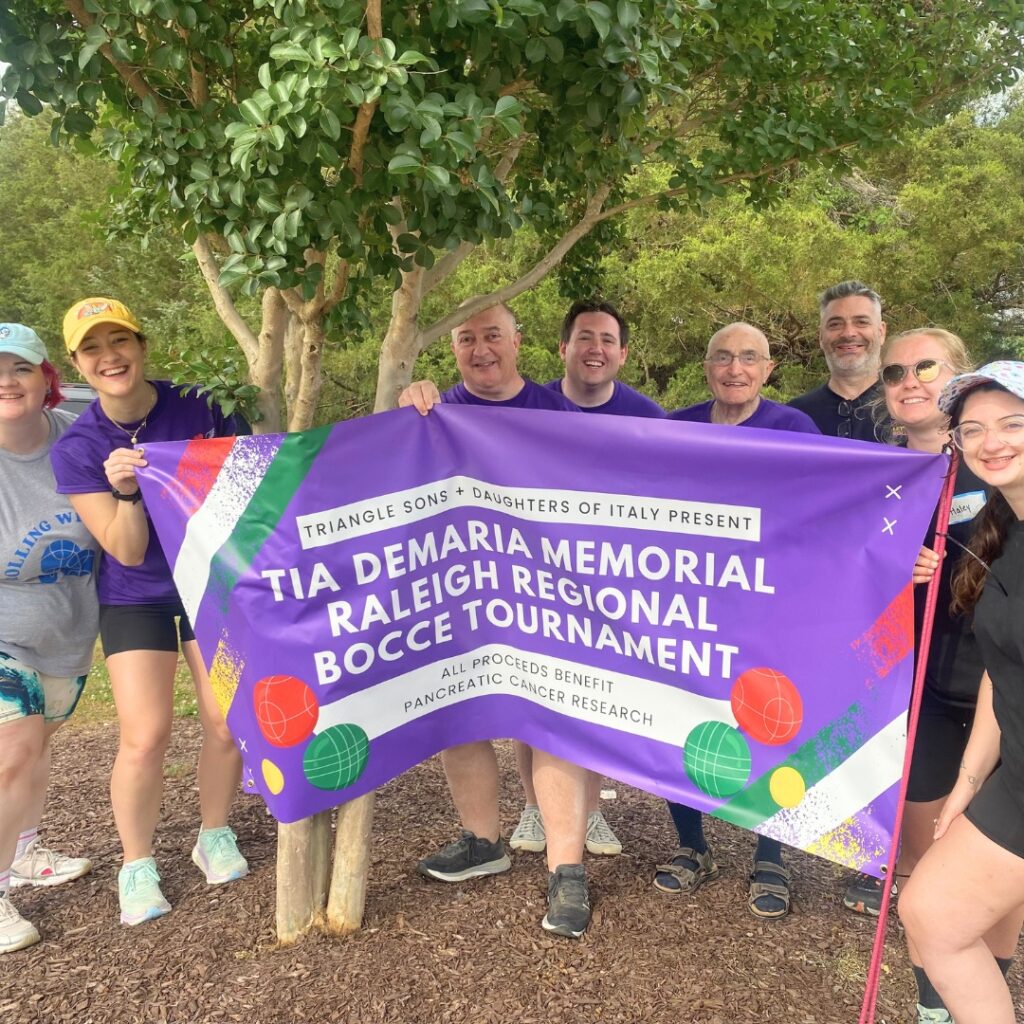
Tia had been very involved in the Triangle Sons and Daughters of Italy, where she loved playing bocce and being part of the community around it. After her mother’s passing, the president of the group approached Kristen about taking on the annual tournament in Tia’s memory. Her answer was immediate: absolutely. The group ultimately renamed the tournament in her mother’s honor, and what followed was both deeply meaningful and unexpectedly powerful.
“It’s one of those moments where you realize how many people someone impacted,” Kristen reflects. “You think you know your family and their friends, but the reality of my mom’s impact on the community was just incredible.” Through the tournament, the group also raised funds for pancreatic cancer, further extending Tia’s legacy into a cause that had also become deeply personal for Kristen.
One Path Forward
Now, having experienced both running in her mother’s honor and organizing the bocce tournament that directly raised funds for pancreatic cancer, Kristen began to think about how those two worlds could come together. If running had become her way of processing grief, and community events had become a way of honoring her mother more publicly, she wondered what it might look like to unite the two.
That question first took shape at the Berlin Marathon in 2025. While she had her own entry into the race, she chose to run alongside Project Purple after learning more about the organization through the bocce tournament connection. “We connected over bocce, but I’m also a runner,” she remembers saying to the team. “If there’s any way I can join a running team for the fall, I would love to.” That outreach became her entry point into Project Purple’s running community.
From there, she deepened her commitment by fundraising with Project Purple, signing up to run the 2025 Marine Corps Marathon. She had actually completed the race the year before as well, though not with Project Purple. That 2024 race had been a difficult one: she was on pace for a major personal record when cramps hit late in the course, derailing what had felt like a breakthrough performance. So, a year later, she decided to do it again, to have a chance to see what she could really do when everything came together.
She felt more confident going into the 2025 race, and she also felt her mother with her throughout it all. “By no means was my mother a quiet person, and I mean that in the best way,” she laughs. “She was very happy and very vocal, and she would laugh—she was herself no matter what. For the couple of races that I did get to have her there for, I could hear her cheering from so far away.”
Even in training, Kristen would imagine that support in her mind. “I would hear her and imagine her cheering me on using my nickname, using things that we had maybe joked about,” she said. “If I’m out on a run and a song comes on that reminds me of my mom, that’s an immediate mood boost or memory. It always takes me back to her.”
That presence stayed with her on race day in D.C. Alongside having her husband and father there, Kristen felt her mother in every step. “I feel like I could hear what she would be saying,” she said. “And I imagined that she was there, being that very lovingly loud support system that I needed.”
Going into the London Marathon in April with Project Purple, Kristen carried those same ideas with her, but London also held an additional layer of personal history. Right before her mother passed, she had booked a trip to Europe with Kristen’s father. After she died, Kristen went with him so he wouldn’t have to make the journey alone, and part of that trip stopped in London. That first trip became something layered: grief, presence, and time shared between father and daughter in the absence of her mother. “So it had all of this extra meaning behind it, which made running it much more special,” she shares.

What She Carried to the Finish
Crossing the finish line has always been an emotional moment for Kristen. “It hits you that not only physically did my body accomplish this, but I was able to do it for something bigger. I know it will make a difference,” she says. All of the work behind it—the fundraising, getting herself to the start line, and seeing it all come together at the finish—brings that emotion into focus. She thinks to herself, “This is something big.”
For Kristen, doing that three times for Project Purple has truly shifted the meaning of racing entirely. “Having that connection, having something else behind it driving me, giving me that ‘why’… it added another layer,” she says. “That is why I do what I do. And I’m able to hopefully make a positive impact on the world by doing something that I already really enjoy.”
That idea of impact is what continues to drive her, especially through the fundraising side of her efforts. She reflects on her mother’s influence and the wider community that has rallied around her. “I don’t think I fully understood how tremendous an impact my mom had,” Kristen says. “But all of the people who knew her loved her, and all of the people who know me and love me, having them show up consistently, whether that’s financially, cheering me on, sending a text, whatever it is, it never ceases to amaze me.”
Kristen hopes that the funds raised through her ongoing efforts with Project Purple will contribute to something larger than her own story: earlier detection and better outcomes for families facing pancreatic cancer. Looking back on her mother’s experience, she often returns to the same question: “If we had caught it earlier, what would that have looked like for my family and for my mom?”
That sense of urgency around advocacy is also something she carries from her mother in another way. Kristen recalls how her mom shaped her own approach to healthcare and self-advocacy, especially through her own health challenges. “She was the force behind making sure I was my own advocate and teaching me to be stronger—how to be more confident, fight for myself, never give up, and speak up.”
And when it comes to grief more broadly, Kristen is candid about how it has evolved for her. She pushes against the traditional idea that grief simply “gets better,” instead saying that it just gets different over time. For her and her family, that ongoing grief journey has become about actively remembering her mother in meaningful ways. “On her passing, we call it Tia Day now,” she explains. “We do things she loved—shopping, playing board games, having a margarita. We remember her in that way.”
That approach has shaped how she thinks about honoring someone after loss, and why she knows running will remain part of that ongoing connection. Running, she explains, was never originally a way to connect to her mother directly, but it has become a way to hold onto her presence in a different sense. “It’s a way I connect to her support for me, and to memories I have of her,” she says. And ultimately, that transformation is what defines her running today: “Having a deeper meaning tied to something I already loved is what makes it something I don’t think I’ll ever stop doing.”
If you’d like to run or participate in an event of your own for Project Purple, visit our events page.