HOUSTON — Project Purple has awarded a $375,000 Research Recovery Grant to researchers at The University of Texas MD Anderson Cancer Center to continue critical pancreatic cancer research.
The two-year grant supports research led by Vincent Bernard, M.D., Ph.D., Assistant Professor of Gastrointestinal Radiation Oncology at UT MD Anderson, focused on understanding treatment resistance in pancreatic cancer.
UT MD Anderson is one of several institutions receiving support through this initiative, along with Georgetown University, The University of Cincinnati, and Weill Cornell Medicine.
“We are proud to support promising early-stage researchers, like Dr. Bernard, and to help accelerate important research that can further our mission,” says Dino Verrelli, CEO and founder of Project Purple. “One of our biggest goals is to have the greatest impact with every program, and we feel this project brings great potential to gain a deeper understanding of pancreatic cancer in order to keep making progress.”
UT MD Anderson Researchers Explore Why Pancreatic Cancer Resists Treatment
Under the guidance of Dr. Bernard, researchers at UT MD Anderson are working to solve one of the most frustrating problems in oncology: why pancreatic cancer is so resistant to treatment. Even when doctors use the most advanced radiation and targeted drugs, the cancer often finds a way to survive and adapt. With support from Project Purple, Dr. Bernard’s team is using high-resolution technology to “map” these survival tactics at a cellular level.
The research focuses on interactions between cancer cells and the tumor microenvironment, the complex neighborhood of cells and structures surrounding a tumor. This environment acts as a shield, helping cancer cells hide from the immune system and survive the effects of therapy. By using advanced tools like single-cell and spatial transcriptomics, the team can see exactly how individual cells and their surroundings change and “rewire” themselves when exposed to radiation and drugs.
The researchers aim to identify the specific biological glitches that allow these tumors to adapt so quickly. By understanding these resistance mechanisms, Dr. Bernard’s lab hopes to find new “therapeutic vulnerabilities,” weak spots in the cancer’s defense that can be exploited.
The team’s ultimate goal is to move beyond standard care and develop rational combination strategies that pair radiation with specific targeted agents to overcome resistance. By defining how the tumor and its environment respond to therapy in real-time, this research is guiding the creation of precision treatments tailored to stop the cancer from adapting.
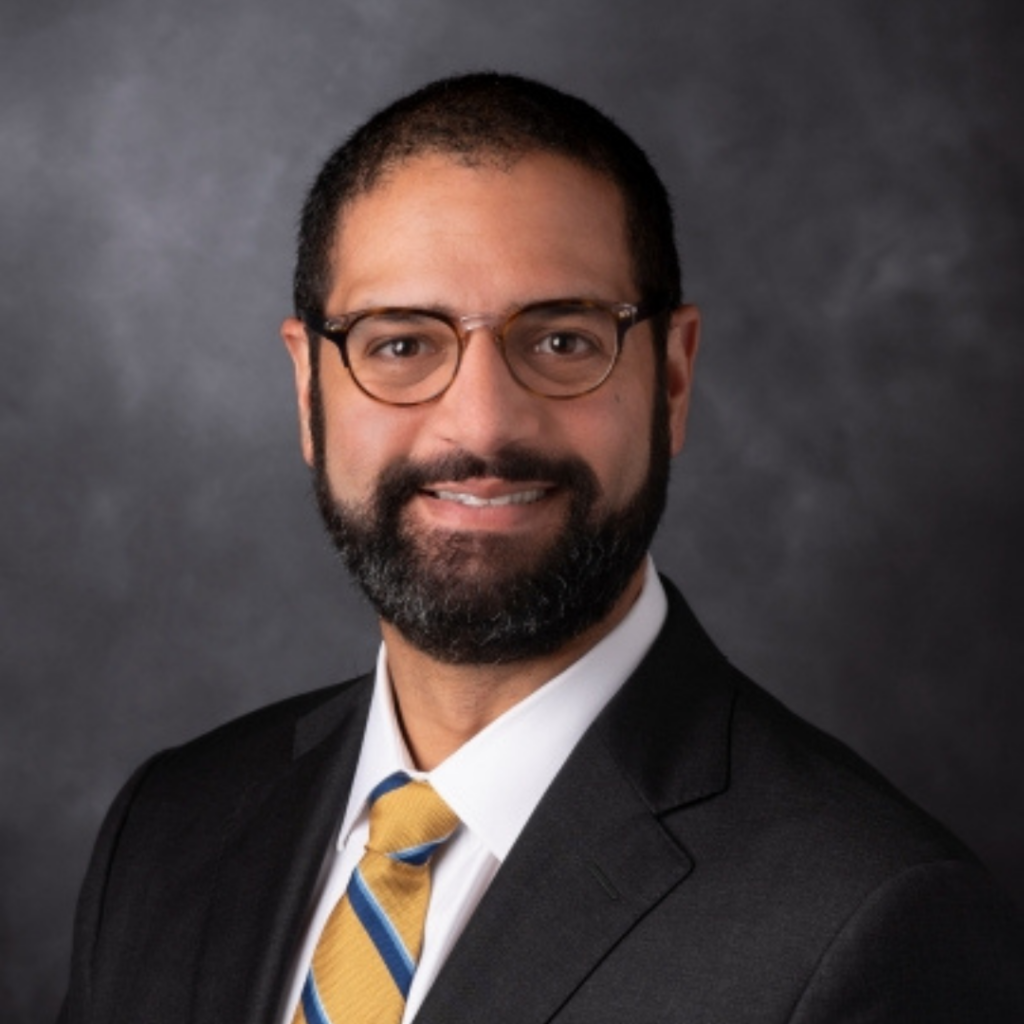
Vincent Bernard, MD, PhD
As a physician-scientist, Dr. Bernard brings a unique perspective to the lab, directly connecting clinical challenges seen in patients with high-tech molecular research. He leads a translational research program dedicated to dissecting how cancer cells and their environments adapt to therapy. His work integrates the latest genetic and spatial mapping technologies to identify why treatments fail and how to fix them. He has been recognized with numerous prestigious awards for his contributions to the field, including the ASCO Conquer Cancer Foundation Young Investigator Award. He holds degrees from Johns Hopkins University and the University of Puerto Rico and completed his specialized training at UT MD Anderson.
Project Purple Sustains Critical Pancreatic Cancer Research
Founded in 2010, Project Purple is dedicated to creating a world without pancreatic cancer while improving care and outcomes for patients and families. The organization has funded more than $5.5 million in pancreatic cancer research, supporting projects that span early detection, curative treatment, technological advancements, and innovative therapeutic strategies.
The $375,000 Research Recovery Grant awarded to UT MD Anderson is part of a special initiative designed to support the careers of early-stage investigators (ESIs), helping emerging scientists maintain momentum and establish independent research programs during the critical early years of their careers.
With guidance from its Multi-Disciplinary Research Committee, Project Purple identifies and funds innovative research initiatives that have the potential to advance the understanding, detection, and treatment of pancreatic cancer. The organization is proud to support Dr. Bernard’s research, ensuring this promising work continues and contributes to the development of more effective treatments for patients.
“Every grant we award represents hope for researchers, patients, and families affected by pancreatic cancer,” said Dino Verrelli, CEO and founder of Project Purple. “We’re proud to help ensure these projects continue to move the field forward and bring us closer to better treatments and, ultimately, a cure.”
In addition to research, Project Purple has awarded more than $1.5 million in patient aid, allowing over 1,500 patients & families to focus on treatment and care rather than financial stress.
To learn more about Project Purple, visit projectpurple.org/about.